
A buyer’s agent is a licensed real estate professional who represents the homebuyer exclusively throughout every stage of a property transaction. Their job is to protect your interests, not the seller’s. From your first property search to the moment you sign at closing, a buyer’s agent guides you through one of the most complex financial decisions you will ever make. According to the National Association of REALTORS, 88% of homebuyers in 2025 purchased with the help of an agent or broker. That number tells you something important: most buyers recognize they need professional representation in their corner.
What does a buyer’s agent do?
The role of a buyer’s agent covers far more than sending you property listings. A buyer’s agent handles the full arc of your purchase, from shortlisting homes to coordinating your closing day.
Here is what that looks like in practice:
- Home search and shortlisting. Your agent filters properties based on your budget, location preferences, school district needs, and must-have features. They save you hours of sorting through listings that do not fit.
- Market analysis and offer pricing. Before you make an offer, your agent pulls comparable sales data to advise on a fair and competitive price. Overpaying is a real risk in competitive markets, and a good agent keeps you grounded.
- Offer drafting and contract contingencies. Buyer’s agent negotiation extends well beyond price. Your agent structures contingencies for inspection, financing, and appraisal to protect you if something goes wrong before closing.
- Negotiating with the seller’s side. Your agent communicates directly with the listing agent, pushing for better terms, repairs after inspection, or seller concessions on closing costs.
- Coordinating inspections and appraisals. Your agent schedules and attends the home inspection, reviews the report with you, and advises on what to request the seller fix or credit.
- Managing paperwork and closing logistics. Real estate contracts run dozens of pages. Your agent tracks deadlines, reviews disclosures, and coordinates with your lender, title company, and escrow officer to keep the deal on track.
Pro Tip: Ask your agent to walk you through the purchase contract line by line before you sign. Understanding what you are agreeing to is just as important as the price you negotiate.

Buyer’s agent vs. seller’s agent: what is the difference?
Listing agents represent sellers and work to maximize the seller’s outcome, including sale price, favorable closing timeline, and minimal concessions. A buyer’s agent focuses exclusively on your interests as the purchaser. These two roles are fundamentally different, and confusing them can cost you money.
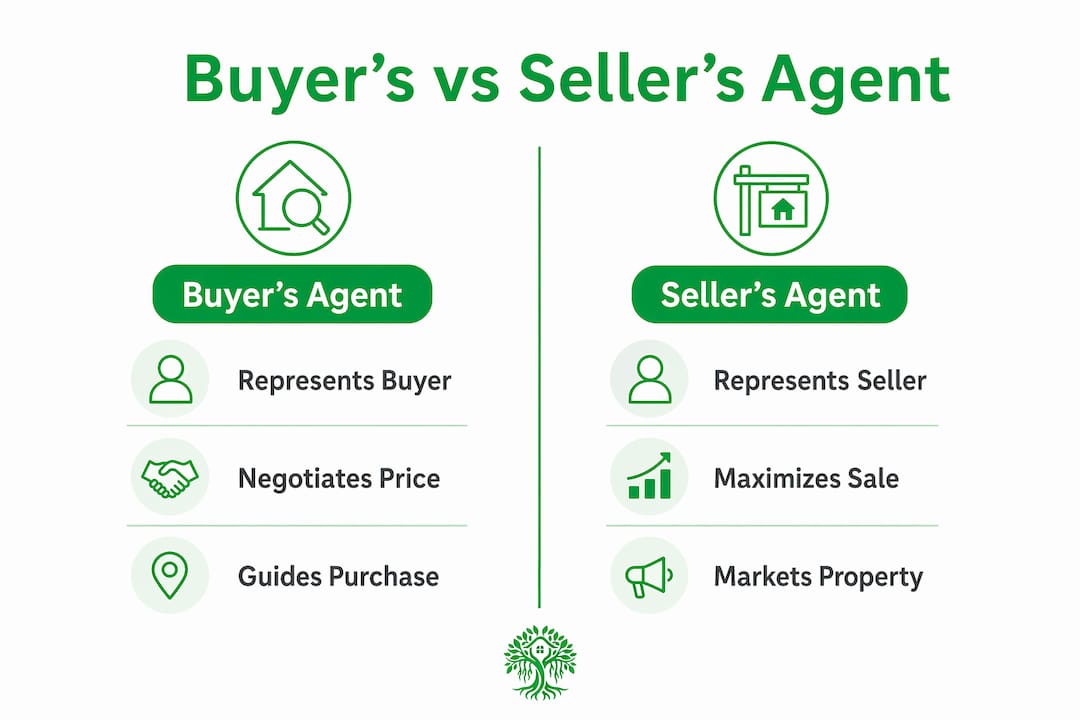
The table below breaks down the key distinctions:
| Factor | Buyer’s Agent | Seller’s (Listing) Agent |
|---|---|---|
| Who they represent | The homebuyer | The home seller |
| Primary goal | Best price and terms for buyer | Highest sale price for seller |
| Negotiation stance | Advocates for buyer concessions | Defends seller’s asking price |
| Disclosure obligations | Discloses material facts to buyer | Discloses material facts to seller |
| Compensation source | Typically paid from sale proceeds | Paid from seller’s proceeds |
Dual agency is a situation where one agent represents both buyer and seller in the same transaction. Most states allow it with written disclosure, but it creates a direct conflict of interest. When one agent serves both sides, neither party gets full advocacy. Managing conflicts of interest through dedicated buyer representation is one of the strongest arguments for hiring your own agent before you tour a single property.
What are the benefits of a buyer’s agent?
Working with a dedicated buyer’s agent delivers concrete advantages that go well beyond convenience. Here are the benefits that matter most:
- Access to off-market and early listings. MLS and proprietary databases give buyer’s agents visibility into properties before they hit public portals like Zillow or Redfin. In a tight inventory market, seeing a home two days early can be the difference between making an offer and missing out.
- Stronger negotiating position. An experienced agent knows when a seller is motivated, when a listing has sat too long, and when to push for repairs versus a price reduction. That knowledge translates directly into savings and better contract terms.
- Objective advice on every decision. You will get emotionally attached to properties. Your agent will not. They provide a clear-eyed read on whether a home is priced fairly, whether the inspection findings are serious, and whether the neighborhood fits your long-term goals.
- Help with legal and contractual complexity. Real estate contracts include contingency clauses, disclosure requirements, and timelines that carry real legal weight. Your agent helps you understand what you are signing. For California buyers specifically, reviewing buyer disclosure documents is a critical step your agent should walk you through.
- Stress reduction across the entire process. Your agent manages communications with the seller’s side, tracks deadlines, and flags problems before they become deal-breakers. You focus on the decision; they handle the logistics.
- Cost savings despite commission. Buyer’s agents provide benefits including negotiation support and access to better-priced properties that often offset their cost entirely.
Pro Tip: When an agent claims they can get you a great deal, ask for specific examples. Request two or three transactions where they negotiated a price reduction or secured seller credits. Real track records beat promises every time.
How to choose the right buyer’s agent
Choosing the right agent is one of the most consequential decisions in your home purchase. A poor fit costs you time, money, and peace of mind. Here is how to evaluate your options with confidence.
- Verify their license and local experience. Every buyer’s agent must hold a valid real estate license in your state. Beyond that, look for someone who has closed deals in your target neighborhoods within the past 12 months. Local market knowledge is not transferable from one city to another.
- Ask about their buyer agency agreement. Under 2024 NAR MLS rules, buyers must sign a written buyer agreement disclosing specific compensation terms before touring homes. This rule protects you. Read the agreement carefully and confirm it specifies compensation as a flat fee or percentage, with no ability to charge above that agreed amount.
- Understand exclusive vs. nonexclusive agreements. Buyer agency agreements may be exclusive or nonexclusive. Exclusive agreements typically result in higher service commitment. Nonexclusive arrangements let you work with multiple agents but often reduce the depth of service you receive.
- Ask directly about dual agency. Some agents work for brokerages that also list properties. Ask whether they would ever represent both sides in a transaction. If the answer is yes, understand what that means for your negotiation leverage before you commit.
- Evaluate communication style and availability. You need an agent who responds within hours, not days. Ask how they prefer to communicate, how many active buyers they are working with, and who covers for them when they are unavailable.
- Check for access to off-market inventory. The best agents have networks that surface properties before public listing. Ask specifically whether they have access to pocket listings or pre-market opportunities in your target area.
For a broader overview of the full purchase process, the first-time homebuyer guide from Ficustree walks through each step from pre-approval to closing.
Pro Tip: Treat the written buyer agreement as a contract, because it is one. Confirm that compensation disclosures are specific and objective before you sign. Vague language about fees is a red flag worth addressing before your first home tour.
Key takeaways
A buyer’s agent is your most important advocate in a real estate transaction, providing representation, negotiation expertise, and process management that protects your financial interests from search to closing.
| Point | Details |
|---|---|
| Exclusive representation | A buyer’s agent works solely for you, not the seller, eliminating conflicts of interest. |
| Negotiation beyond price | Agents negotiate contingencies, repairs, and contract terms, not just the purchase price. |
| Written agreements required | Since 2024, NAR rules require signed buyer agreements with clear compensation terms before home tours. |
| Agent type matters | Buyer’s agents and listing agents have opposing goals; never rely on the seller’s agent for advice. |
| Selection criteria | Prioritize local experience, transparent fee agreements, and access to off-market listings when choosing an agent. |
Why i think most buyers underestimate their agent’s real value
I have watched buyers focus almost entirely on finding the right home while treating the agent selection as an afterthought. That is the wrong order of operations. The agent you choose shapes every decision that follows, from which homes you see first to how your offer is structured when competition gets serious.
The 2024 NAR MLS changes are genuinely good for buyers. Written compensation disclosures before home tours mean you know exactly what you are agreeing to pay before you fall in love with a property. That clarity removes a layer of financial ambiguity that used to catch buyers off guard at closing.
What most articles miss is that a buyer’s agent’s real leverage shows up in contract structure, not just price. A skilled agent who negotiates a $10,000 repair credit or a financing contingency that protects your deposit is delivering value that never shows up in the sale price comparison. That is the part of the role worth paying close attention to.
My honest advice: interview at least three agents, read every line of the buyer agreement, and ask each one to describe a deal where they protected a buyer from a bad outcome. The answer to that question will tell you more than any credential.
— Anand
Find your home faster with Ficustree
Hiring a great buyer’s agent is a smart move. Pairing that agent with the right technology makes the entire process faster and less stressful.

Ficustree is an AI-powered home buying platform built specifically for first-time buyers. It matches your criteria to available listings, gives you market insights before you make an offer, and keeps your entire purchase organized on one platform. Whether you are still evaluating neighborhoods or ready to make an offer, Ficustree supports every step. Explore the Ficustree buyer platform to see how AI-powered search changes what you can find and how fast you can move. Your next home is closer than you think. Start your search →
FAQ
What is a buyer’s agent in real estate?
A buyer’s agent is a licensed real estate professional who represents the homebuyer exclusively throughout the purchase process, from home search through closing. Their legal duty is to act in your best interest, not the seller’s.
Do i have to pay a buyer’s agent out of pocket?
Buyer’s agent compensation is typically paid from the sale proceeds, though the exact structure depends on your written buyer agreement. Under 2024 MLS rules, compensation terms must be disclosed and agreed upon in writing before you tour homes.
What is the difference between a buyer’s agent and a listing agent?
A listing agent represents the seller and works to maximize the seller’s outcome. A buyer’s agent represents you and negotiates for your best price and terms. Using the seller’s agent as your representative creates a direct conflict of interest.
How do i know if a buyer’s agent is the right fit?
Ask about their recent transactions in your target neighborhood, review their buyer agency agreement carefully, and confirm they have access to off-market listings. Communication style and availability matter as much as credentials.
Can i buy a home without a buyer’s agent?
You can, but most homebuyers choose professional representation because the process involves complex contracts, tight deadlines, and high-stakes negotiations. Going unrepresented means you handle all of that alone while the seller has an experienced agent working against your interests.