Why Fontana, California Is a Smart Home-Buying Market
An affordable Inland Empire hub balancing value, family appeal, and emerging growth.
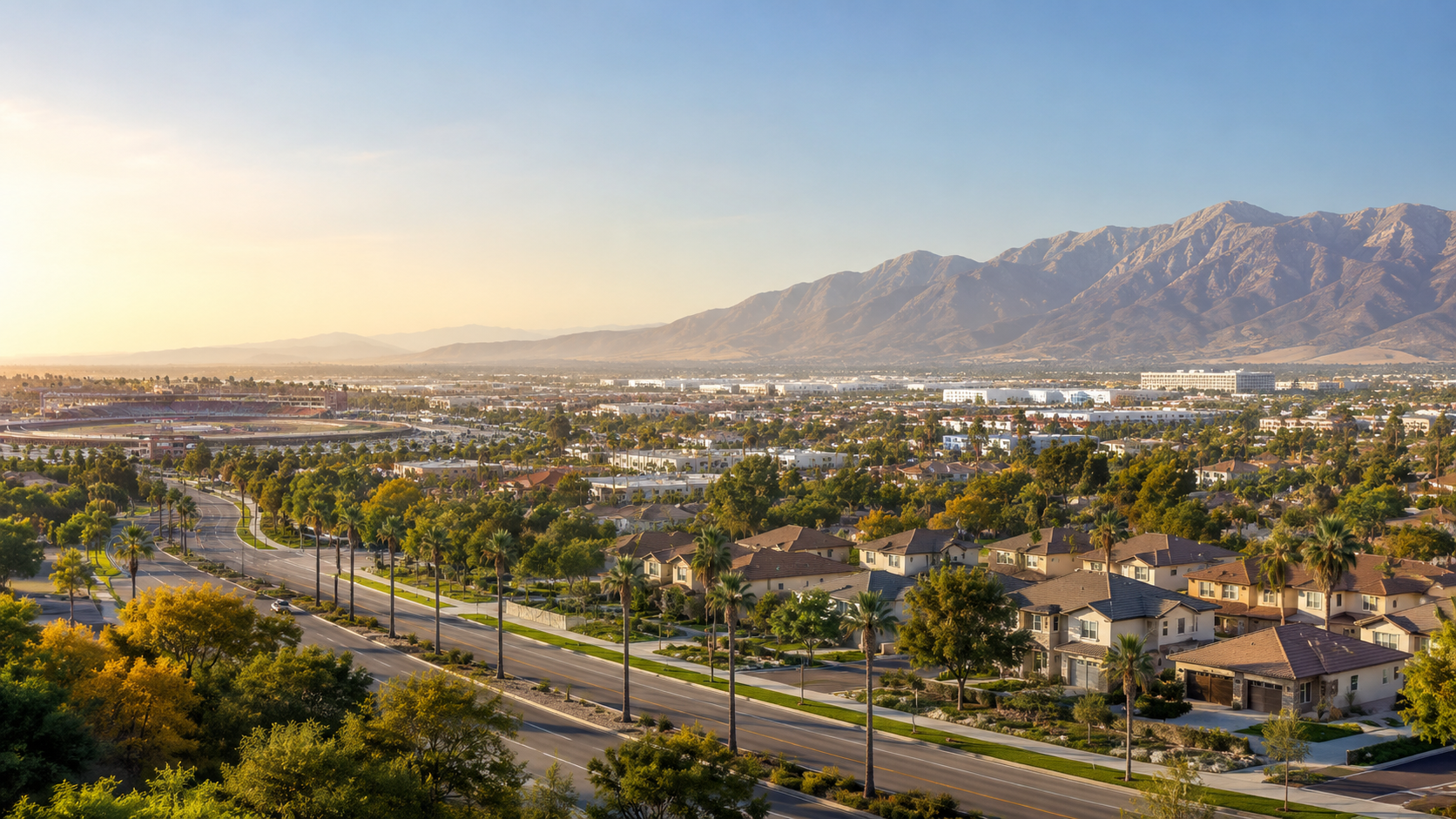
Living and buying in Fontana, CA
Fontana is a growing Inland Empire city that appeals to first-time buyers, families, and investors seeking affordable entry into Southern California real estate. With a median home value of $506,600 and a median household income of $93,230, the city offers strong purchasing power for working families. Over 66% of housing units are owner-occupied, reflecting stable residential commitment, while the population of 209,279 continues to expand with new development. This combination of affordability, demographic diversity, and strategic location makes Fontana a compelling option for buyers navigating competitive California markets.
Who should buy in Fontana
Fontana attracts first-time buyers, families with children, investors, and remote workers seeking affordability and regional connectivity.
Median prices of $506,600 and a 66.6% owner-occupancy rate create a welcoming market for new homeowners; strong local financing options and lower entry barriers than coastal California.
41.4% of the surrounding area has children; Fontana Unified School District serves multiple K-12 options including Fontana High, Tokeney Elementary, and Almeria Middle; affordable suburban lifestyle with nearby parks and recreation.
Estimated 3.8% to 4.2% rental yield with median rents around $1,616/month; growing population and emerging development corridors support long-term appreciation.
Lower cost of living than coastal metros allows more space per dollar; proximity to Foothill Boulevard and regional transit provides fallback commute options.
Fontana Community Senior Center and nearby fitness amenities support active aging; affordable housing stretches fixed incomes further.
Who should think twice
Fontana is car-dependent with limited walkability and public transit, making it less suitable for transit-reliant or urban-lifestyle buyers.
Best neighborhoods in Fontana
Fontana is structured around several residential corridors anchored by Foothill Boulevard and Sierra Avenue. Established neighborhoods near Licorice Park and Lemon Park offer stability and family infrastructure, while emerging areas toward the east (near Sierra Lakes Parkway) attract newer construction and younger demographics.
Each neighborhood reflects Fontana's evolution from industrial-era housing stock to contemporary master-planned developments. Buyers should focus on proximity to schools, Foothill Boulevard for commercial access, and specific block-level safety data when evaluating options. The city's growth is driving reinvestment in central corridors, while newer areas near Sierra Lakes attract families seeking suburban convenience.
All neighborhoods in Fontana
Browse detailed buyer guides for every Fontana neighborhood we cover, including local market data, walkability, schools, and lifestyle.
Fontana home prices and market data
Fontana's median home price of $506,600 sits significantly below California state median, offering strong value for Inland Empire buyers. The market has shown modest appreciation with stable inventory levels characteristic of a balanced buyer-seller dynamic.
vs CA Median: 34% below CA median | Inventory: 3.8 months
Real estate trends and forecast in Fontana
Fontana is experiencing moderate appreciation and steady investor interest driven by affordability and regional employment growth. The surrounding Inland Empire metro has seen accelerating demand as remote work and logistics industries reshape regional dynamics.
GROWTH DRIVERS
- Inland Empire logistics and e-commerce expansion
- Remote work enabling Inland Empire migration from coastal markets
- Affordable entry prices attracting first-time buyers and investor capital
- Population growth (209,279 residents) driving residential demand
RISK FACTORS
- Interest rate sensitivity in a price-conscious buyer pool
- Zoning pressures from industrial expansion near residential zones
- Occasional air quality challenges typical of inland Southern California
Fontana remains an attractive entry point for buy-and-hold investors and first-time homebuyers. Sierra Lakes and newer corridors near Baseline Avenue show strongest momentum for appreciation and rental demand. The city's location 50 miles east of downtown Los Angeles, combined with regional employment hubs in Ontario and San Bernardino, supports sustained demand. Price appreciation is expected to outpace inflation but remain moderate relative to coastal markets; investors should target neighborhoods within one mile of Foothill Boulevard for best visibility and liquidity.
True cost of owning a home in Fontana
Owning a $506,600 home in Fontana costs approximately $3,850 to $4,200 monthly including mortgage, taxes, insurance, and utilities, making it accessible for households earning $93,000 or more.
Mortgage, taxes, insurance, HOA, utilities, and maintenance add up fast. Use Ficustree’s True Cost of Ownership calculator to model the full monthly carrying cost for your specific price point, county, and loan terms before you commit.
For a quick anchor, a $500K home in Fontana typically runs around $3,760/month all-in. Income to qualify is roughly $135,000/yr with a 20% down payment of $101,320. Use the calculator above for your exact numbers.
Quality of life in Fontana
Fontana scores 37/100 on overall livability, reflecting strong affordability and family orientation offset by car-dependency and moderate walkability. The city provides adequate schools, healthcare, and parks for families while demanding vehicle reliance for daily activities.
Climate: Mediterranean: warm, dry summers (85F-95F) and mild winters (50F-65F); low rainfall concentrated November through March.
Schools in Fontana
Fontana Unified School District serves approximately 24,500 students across elementary, middle, and high schools with a GreatSchools average of 6.8/10. The district includes well-regarded options like Tokay Elementary, Fontana High, and Almeria Middle.
Top Schools: Tokay Elementary, Fontana High, Almeria Middle, Beech Avenue Elementary, Oleander Elementary
Private Options: Mojave River Academy – Gold Canyon, Kindercare Learning Centers
Is Fontana safe?
Fontana's crime rate is above the California average with a violent crime index of 158 (100=US average) and property crime index of 189. Safer neighborhoods cluster near central corridors and newer master-planned communities; higher-crime areas exist near industrial zones and southern residential blocks.
Safest areas: Sierra Lakes, Downtown Fontana near Spring Street, South Fontana near Cherry Avenue
Trend: stable | Watch: Neighborhoods adjoining industrial corridors and Interstate 10 corridors experience higher property crime; buyers should verify specific block-level crime data and police patrol presence.
Property taxes in Fontana
Prop 19 (2021) allows reassessment of inherited properties; beneficiaries should expect potential tax increases on transferred real estate.
Honest buyer reality check
The honest take: Fontana's affordability comes with tradeoffs. The city is car-dependent with limited walkability (score: 21), requiring most residents to drive to work, schools, and errands. Crime rates exceed California averages in some neighborhoods, though newer master-planned areas and central corridors are safer. Industrial zoning near major transportation corridors means occasional air quality concerns and noise; buyers near I-10 should expect freight traffic. Population growth is a double-edged sword: it drives demand and appreciation, but also strains schools and infrastructure.
Hidden costs buyers miss: Buyers often underestimate vehicle ownership costs (fuel, maintenance, insurance) due to car-dependency. HOA fees, while modest, can increase with community improvements. Air quality issues may trigger health costs for vulnerable individuals. Some properties have Mello-Roos district assessments that add 0.5% to 1% to annual tax bills. Flood and earthquake insurance premiums are not always factored into affordability calculations.
Natural risks: Seismic activity: Fontana sits near fault lines; earthquake insurance is prudent, Flood risk: Portions near wash areas and drainage corridors may have higher premiums, Air quality: Summer smog and pollution days can impact respiratory health
Zoning watch: Industrial zoning boundaries near Foothill Boulevard and I-10 corridors may limit residential expansion and create noise/air quality spillover. Buyers should review local zoning maps and setback requirements before purchasing near commercial or logistics facilities.
Unexpected cost factor: 8% to 12%
Nature and outdoor life
Fontana offers modest but growing park infrastructure with Licorice Park, Lemon Park, and Summerwood Way Park providing family recreation. The broader Inland Empire region provides access to San Bernardino National Forest and local hiking trails within 30 minutes.
Seasonal highlights: Spring wildflowers in nearby foothills; summer heat makes trails more challenging; fall and winter offer cooler hiking conditions and occasional snowy peaks visible from elevated neighborhoods.
Daily Life and Amenities in Fontana
Real named places within Fontana from Proximitii’s POI database.
- Chapala Mexican Grill · 16 min walk
- Alex Tacos · 19 min walk
- My N.Y. Pizza · 20 min walk
- The Hot Spot · 20 min walk
- Baker's Drive Thru · 22 min walk
- McDonald's · 22 min walk
- Starbucks · 25 min walk
- The Bookmark Cafe Bar · 47 min walk
- Starbucks · 48 min walk
- Starbucks · 62 min walk
- Starbucks · 65 min walk
- Starbucks · 66 min walk
- Licorice Park · 15 min walk
- Lemon Park · 18 min walk
- Summerwood Way Park · 27 min walk
- Superior Grocers · 19 min walk
- Cardenas · 27 min walk
- WinCo Foods · 40 min walk
- Stater Bros. · 44 min walk
- El-Pane-Sito · 46 min walk
- El Super · 50 min walk
- Cypress Center · 32 min walk
- Knights of Columbus · 33 min walk
- Fontana Community Senior Center · 42 min walk
- RAW MVMT · 44 min walk
- New U Fitness · 45 min walk
- Chuze Fitness · 50 min walk
- Fontan Historical Society · 38 min walk
- Art Depot Gallery · 43 min walk
- Fontana Historical Society – Research Library · 45 min walk
- The Koehler Gallery · 45 min walk
- Stage Red Fontana · 46 min walk
- Fontana Historical Society – Historical Room · 47 min walk
Frequently asked questions about Fontana real estate
Is Fontana a good place to buy a home?
Yes, Fontana is an excellent choice for first-time buyers, families, and investors seeking affordability in the Inland Empire. The median home price of $506,600 is 34% below California's state median, offering strong purchasing power. Owner-occupancy rates of 66.6% reflect stable neighborhoods, and estimated rental yields of 3.8% to 4.2% support investment strategies. However, buyers must accept car-dependency and moderate crime rates; the city is best suited for practical, value-focused households rather than urban-lifestyle seekers.
What is the average home price in Fontana?
The median home price in Fontana is $506,600 as of the latest market data. Condos average around $385,000, while single-family homes range from $450,000 in established neighborhoods to $650,000 in newer master-planned communities like Sierra Lakes. Prices vary based on proximity to Foothill Boulevard, school district ratings, and neighborhood safety scores.
What are the best neighborhoods in Fontana?
Sierra Lakes offers modern master-planned living with the highest walkability (28) and amenities, ideal for families and first-time buyers. Downtown Fontana near Spring Street and Foothill Boulevard provides established character and commercial proximity for investors. South Fontana near Cherry Avenue appeals to families seeking quiet residential blocks and strong school access. Each neighborhood has distinct price points and safety profiles; buyers should evaluate specific blocks using Fontana police crime maps and school ratings.
Is Fontana safe?
Fontana's overall crime rate (C grade) is above the California average with violent crime index of 158 and property crime index of 189 (100=US average). Safer neighborhoods include Sierra Lakes, Downtown Fontana near Spring Street, and South Fontana areas. Higher-crime zones adjoin industrial corridors near I-10 and southern residential blocks. Buyers should verify specific block-level crime data with the Fontana Police Department before finalizing offers; newer developments generally offer better safety profiles than older neighborhoods.
What is the cost of living in Fontana?
Fontana's cost of living is moderate, with affordability index of 82/100. A median household income of $93,230 supports homeownership of median-priced homes after 20% down payment and standard mortgage qualification. Monthly ownership costs for a $506,600 home average $3,760 including mortgage, property tax ($385), insurance ($135), HOA ($85), and utilities ($225). Rentals are affordable at $1,380 for one-bedroom and $1,950 for three-bedroom apartments, making the city accessible for various income levels.
How are schools in Fontana?
Fontana Unified School District serves 24,500 students with a GreatSchools average of 6.8/10, slightly below California state average. Standout schools include Tokay Elementary, Fontana High, and Almeria Middle. The district offers varied quality across neighborhoods; families should review individual school ratings and test scores. Private alternatives include Mojave River Academy. School proximity and quality vary significantly by neighborhood; buyers with children should prioritize this research during home selection.
What are property taxes in Fontana?
San Bernardino County's base property tax rate is 1.25% of assessed property value. On a $506,600 home, annual property taxes average $6,325, or approximately $385 monthly. Some neighborhoods have Mello-Roos community facility assessments adding 0.5% to 1% to total tax bills. Proposition 19 (2021) allows reassessment of inherited properties, potentially increasing taxes for transferred real estate. Buyers should obtain preliminary property tax estimates for specific addresses during escrow.
Is Fontana a good investment?
Fontana earns a BUY rating for investors, with estimated rental yields of 3.8% to 4.2% and modest YoY appreciation of 3.2%. Long-term appreciation (5-year: +18.5%, 10-year: +32.1%) supports buy-and-hold strategies. Regional employment growth in logistics, e-commerce, and remote work sectors drives sustained demand. Sierra Lakes and Foothill Boulevard corridors show strongest momentum. Primary risks include interest-rate sensitivity, zoning pressures from industrial expansion, and crime volatility. Investors should target 1-2 year hold periods and prioritize neighborhoods near schools and commercial corridors for liquidity.
Where this Fontana data comes from
All numbers come from public, authoritative sources you can verify yourself. We pull median home values and demographic profiles from the U.S. Census Bureau, walk and transit ratings from Walk Score, school information from GreatSchools, and geographic boundaries from OpenStreetMap.
Find Your Home in Fontana with AI-Powered Search
Explore neighborhoods, compare prices, and connect with local agents using Ficustree's intelligent platform tailored to Fontana buyers.
Search Fontana Homes →