Why Buyers Love Fremont, California
Fremont is a prosperous East Bay city known for its tech workforce, diverse neighborhoods, and strong educational institutions.
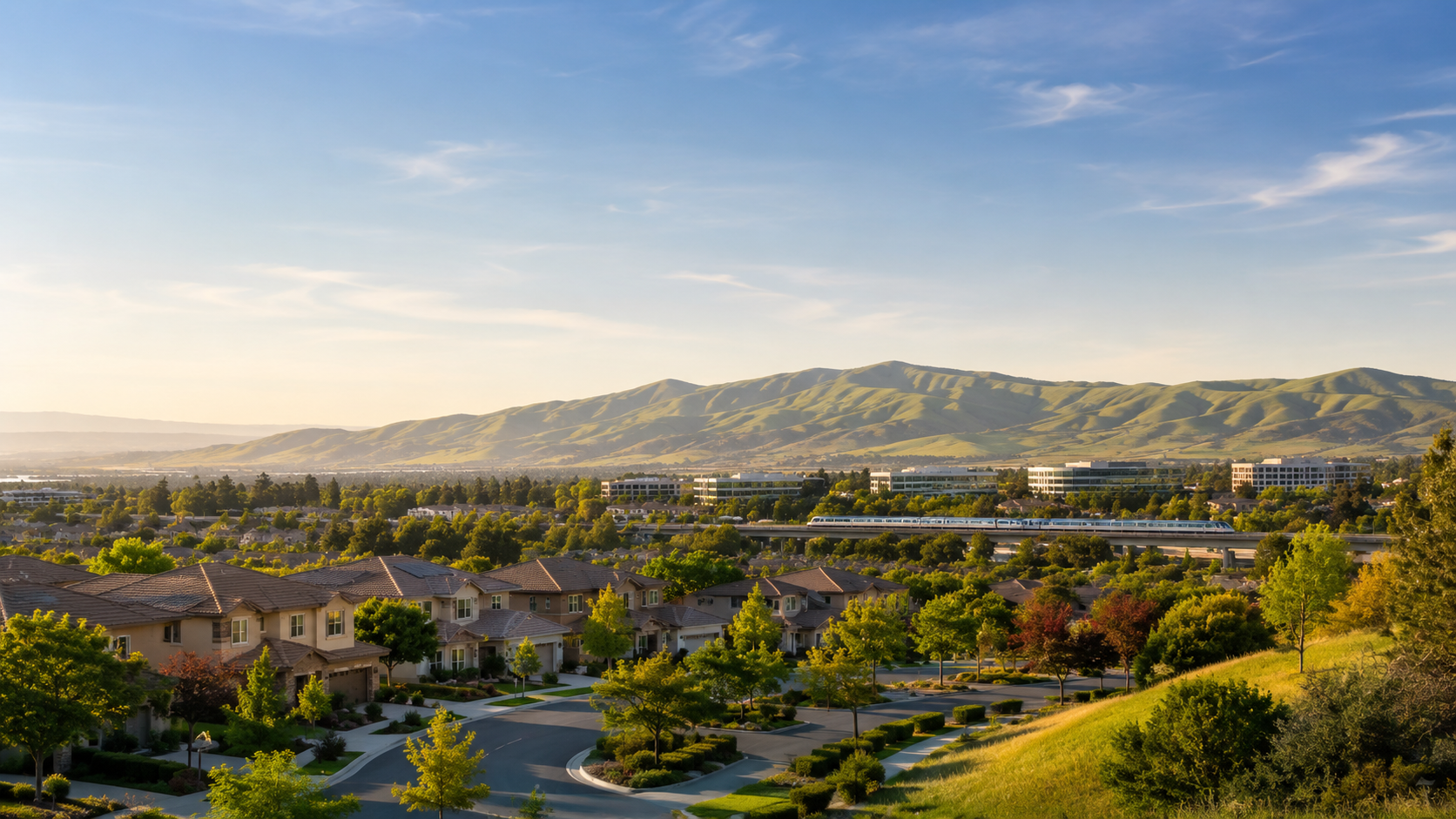
Living and buying in Fremont, CA
Fremont stands out as one of California's most affluent suburban communities, with a median home value of $1.23 million and a median household income of $169,023. This East Bay city of nearly 229,000 residents combines exceptional walkability (Walk Score 88) with a highly educated population: 61.9% hold bachelor's degrees or higher. Buyers here range from first-time buyers seeking appreciating asset classes to established families and remote workers drawn to the area's walkable commercial corridors, top-rated schools, and proximity to tech employment centers.
Who should buy in Fremont
Fremont appeals most to educated professionals, family-oriented buyers, and tech workers seeking walkable suburban living with top schools.
Fremont offers strong price appreciation and excellent neighborhoods at the lower end of the market (condos and townhomes near downtown), plus a highly educated demographic and stable community.
With 61.9% of residents holding bachelor's degrees, top-ranked schools like Washington High, and 34.7% of households with children, family amenities abound from Centerville Community Park to walkable retail corridors.
Fremont's strong median household income ($169,023), high owner-occupancy rate (60.7%), and consistent appreciation make it a stable rental and flip market with rental yields of 2.7 to 3.2%.
The city's exceptional walkability score of 88, abundance of coffee shops (Starbucks, Philz Coffee), and co-working-friendly neighborhoods allow remote workers to maintain lifestyle without constant commute pressure.
Healthcare access is excellent (10/10 score), with numerous dentists and pharmacies within walking distance; low crime (B+ grade), mild climate, and cultural amenities like the Children's Natural History Museum offer peaceful aging-in-place options.
Who should think twice
Fremont may disappoint budget-conscious buyers, car-free commuters, and those seeking a more rural or artsy vibe.
Best neighborhoods in Fremont
Fremont's neighborhoods range from walkable downtown hubs near Mowry Avenue to family-oriented subdivisions in Centerville and sprawling residential areas toward the south. Each micro-community carries its own identity, school assignment, and price tier.
Fremont's neighborhood diversity ensures buyers can find a fit whether they prioritize walkability, school ratings, or suburban peace. The Mowry Avenue Corridor and Paseo Padre Parkway areas offer the most vibrant retail and urban energy, while Centerville and South Fremont appeal to families seeking established neighborhoods and higher safety grades. Price differences are modest across neighborhoods (typically $200k to $300k variance), so buyer choice should center on lifestyle priorities rather than steep arbitrage opportunities. Investors often favor Centerville for rental stability, while remote workers and young professionals gravitate toward Mowry for walkable coffee shops and dining options.
All neighborhoods in Fremont
Browse detailed buyer guides for every Fremont neighborhood we cover, including local market data, walkability, schools, and lifestyle.
Fremont home prices and market data
Fremont's real estate market remains stable and seller-favored, with a median home price of $1.23 million and modest year-over-year appreciation. Inventory remains tight, benefiting owners and repeat investors.
vs CA Median: 38% above California median | Inventory: 1.8 months
Real estate trends and forecast in Fremont
Fremont's market has moderated from pandemic peaks but remains firm, supported by high local incomes and strong educational appeal. Prices are appreciating at a measured pace as affordability constraints limit buyer pools.
GROWTH DRIVERS
- High median household income ($169,023) supports strong buyer demand
- Top-tier schools and educated demographic attract families willing to stretch budgets
- Tech-sector employment in nearby Silicon Valley and South Bay drives commuter demand
- Walkability and proximity to Bay Area amenities (BART access via nearby stations) support long-term appreciation
RISK FACTORS
- Affordability constraints limit first-time and middle-income buyer pools, potentially capping appreciation
- Rising interest rates and stricter lending standards compress buyer purchasing power in the $1M+ range
Fremont's real estate market is projected to appreciate steadily at 2 to 4% annually over the next three years, driven by persistent demand from high-income tech workers and families prioritizing schools. The Mowry Avenue Corridor and Centerville neighborhoods are most likely to see sustained buyer interest and price appreciation due to walkability and school access. Investors should expect moderate rental yields (2.7 to 3.2%) with strong tenant stability, as the 60.7% owner-occupancy rate and high median income suggest quality long-term renters. However, the tight months-of-inventory (1.8) and limited sub-$1M inventory may dampen rapid appreciation and first-time buyer activity.
True cost of owning a home in Fremont
Total monthly ownership costs for a $500,000 Fremont home average around $3,750 to $4,150, including mortgage, taxes, insurance, and utilities.
Mortgage, taxes, insurance, HOA, utilities, and maintenance add up fast. Use Ficustree’s True Cost of Ownership calculator to model the full monthly carrying cost for your specific price point, county, and loan terms before you commit.
For a quick anchor, a $500K home in Fremont typically runs around $3,723/month all-in. Income to qualify is roughly $285,000/yr with a 20% down payment of $246,000. Use the calculator above for your exact numbers.
Quality of life in Fremont
Fremont delivers exceptional quality of life for affluent, education-focused households, with outstanding walkability, healthcare access, and educational resources. The city's safety and purchasing power are solid, though traffic congestion can be a drawback.
Climate: Mediterranean: warm, dry summers (80-90 degrees F) and mild winters (45-65 degrees F); low annual rainfall concentrated in winter months.
Schools in Fremont
Fremont Unified School District is highly regarded, with a 61.9% bachelor's-degree-or-higher attainment rate among residents and strong performance on state assessments. The district serves approximately 30,000 students across elementary, middle, and high schools.
Top Schools: Washington High School, American High School, John F. Kennedy High School, Basis Independent Fremont (private charter), Prince of Peace Lutheran School (private)
Private Options: Basis Independent Fremont, Prince of Peace Lutheran School, Fremont Christian School, Genius Kids Montessori, Stratford School
Is Fremont safe?
Fremont maintains a low-to-moderate crime rate relative to California and the Bay Area, with most neighborhoods ranking in the B+ to A range for safety. Violent crime is below state averages, though property crime remains a minor concern in select commercial corridors.
Safest areas: Centerville, South Fremont (Thornton Avenue area), North Fremont (near John F. Kennedy High)
Trend: stable | Watch: Mowry Avenue and Fremont Boulevard commercial strips experience higher property crime (vandalism, auto theft) due to retail density; remain vigilant with vehicle security in these corridors.
Property taxes in Fremont
Proposition 19 (2020) allows reassessment of primary residences and properties sold at a loss; expect tax increases upon sale or property transfer.
Honest buyer reality check
The honest take: Fremont is a solid, stable market for affluent buyers but carries real affordability headwinds and saturation risks for investors. The $1.23M median home price is nearly 40% above California's state median, pricing out lower-income households and limiting your buyer pool if you ever need to sell. Appreciation has slowed to 2.8% year-over-year, well below historical averages, suggesting the city has matured and buyer demand may plateau. For investors chasing rental yield, the 2.7 to 3.2% returns are modest; you're paying top dollar for stability, not explosive cash flow.
Hidden costs buyers miss: Beyond the obvious mortgage and property tax, expect Mello-Roos assessments (special property taxes) in newer subdivisions; these add $100 to $300/month and are often overlooked in purchase agreements. Earthquake insurance is advisable near active faults in the Fremont area; factor in $400 to $600/yr. Aging neighborhoods may require foundation or roof work within 5 to 10 years; budget 1% of home value annually for maintenance, not the standard 0.5%.
Natural risks: Seismic activity: Fremont sits near the Hayward Fault, one of California's most active; earthquake risk is genuine and insurance costs reflect that reality, Flooding: Parts of southern Fremont near the San Francisco Bay and slough areas face bay-water encroachment and flood-zone overlays; verify FEMA flood maps before purchase, Air quality: Summer ozone levels and wildfire smoke from inland fires can degrade air quality; residents with respiratory conditions should monitor seasonal air-quality reports
Zoning watch: Fremont has increasingly mixed-use zoning in downtown corridors; new multi-family development near Mowry and Paseo Padre may increase noise and traffic. Single-family zoning dominates south Fremont, limiting future density and rental inventory. Commercial-to-residential overlays in older neighborhoods may signal future gentrification or, conversely, further retail decline.
Unexpected cost factor: 12% to 18% above listed purchase price (closing costs, inspections, appraisals, title insurance, and post-purchase repairs).
Nature and outdoor life
Fremont offers moderate outdoor recreation access, with urban parks like W. Burdette Williams Historic Park and Centerville Community Park nearby, plus proximity to larger Bay Area trails and water recreation. The city's park score (10/10) reflects abundant green space, though major hiking and wilderness areas require short drives.
Seasonal highlights: Spring wildflowers bloom in nearby Sunol; summer brings warm dry weather ideal for outdoor sports and bay recreation; fall offers mild hiking conditions and clear views; winter is wet but mild.
Daily Life and Amenities in Fremont
Real named places within Fremont from Proximitii’s POI database.
- Yogurtland · 1 min walk
- Jamba · 1 min walk
- McDonald's · 2 min walk
- Noah's Bagels · 2 min walk
- Pho Lan Noodles House · 2 min walk
- Curry Pizza House Fremont Blvd · 2 min walk
- Chaat Cafe · 2 min walk
- Starbucks · 2 min walk
- The Posh Bagel · 4 min walk
- Starbucks · 5 min walk
- Stardust Coffee House · 5 min walk
- Duet Tea · 8 min walk
- W. Burdette Williams Historic Park · 5 min walk
- Centerville Community Park Playground · 11 min walk
- Centerville Community Park · 12 min walk
- MEGA MART · 3 min walk
- Safeway · 6 min walk
- Bharat Bazar · 8 min walk
- Trader Joe's · 9 min walk
- FoodMaxx · 11 min walk
- Smart & Final · 12 min walk
- Yoga Journey Studios · 3 min walk
- Fremont Community Activities Center · 11 min walk
- FBC Fitness · 13 min walk
- Stretch Lab · 15 min walk
- The Bar Method · 15 min walk
- LFBA · 23 min walk
- Tak Fudenna Memorial Stadium · 10 min walk
- Children's Natural History Museum · 13 min walk
- Ciné Lounge · 17 min walk
- Expression8 Art Gallery · 17 min walk
- Amphitheater · 31 min walk
- Pacific Bus Museum · 33 min walk
Frequently asked questions about Fremont real estate
Is Fremont a good place to buy a home?
Yes, Fremont is an excellent choice for affluent families and professionals seeking top-rated schools, walkable neighborhoods, and strong appreciation in a stable market. The median home price of $1.23 million reflects the city's desirability, and the median household income of $169,023 ensures strong buyer demand. However, affordability remains a challenge for first-time buyers or those with limited down payments. Fremont is best suited to households earning $250k+ annually and prioritizing education, safety, and walkability over dramatic appreciation or trendy culture.
What is the average home price in Fremont?
The median home price in Fremont is $1.23 million as of the latest data. Condos and townhomes average around $895,000, while single-family homes typically range from $1.1 million to $1.6 million depending on neighborhood, lot size, and condition. Prices have appreciated 2.8% year-over-year and 18.3% over the past five years, outpacing inflation but lagging the broader California market.
What are the best neighborhoods to buy in Fremont?
Centerville is the most family-friendly neighborhood, with top-rated schools, established tree-lined streets, and a strong sense of community; expect median prices of $1.3M to $1.6M. The Mowry Avenue Corridor offers exceptional walkability (Walk Score 88), abundant retail, and younger demographics; prices range $1.1M to $1.4M. Paseo Padre Parkway is ideal for those wanting newer development and dining options at $1.15M to $1.35M. South Fremont appeals to families seeking quieter, car-oriented neighborhoods at $1.2M to $1.5M.
Is Fremont safe?
Fremont earns a B+ safety grade overall, safer than 78% of California cities. Violent crime is below state averages (index: 82 vs. 100 US average), and neighborhoods like Centerville and South Fremont rank in the A range. Property crime in commercial corridors (Mowry Avenue, Fremont Boulevard) is slightly elevated; remain vigilant with vehicle security and home alarms in these areas. The city's trend is stable, with consistent police patrols and community engagement.
What is the cost of living in Fremont?
Fremont's cost of living is high relative to California and the nation, driven by the $1.23M median home price and $2,824 median monthly rent. Property taxes average $3,800 annually on a $500,000 home (0.76% Alameda County rate). Utilities run $200 to $250/month; groceries and dining are moderate to high due to walkable retail density. However, the median household income of $169,023 means many residents comfortably absorb these costs. First-time buyers or households earning under $150k annually should carefully model affordability before purchasing.
How are schools in Fremont?
Fremont Unified School District is highly regarded with a GreatSchools average rating of 8.5/10. Washington High School, American High School, and John F. Kennedy High School are among the top public high schools in the East Bay. The district serves approximately 30,000 students and benefits from affluent demographics: 61.9% of Fremont residents hold bachelor's degrees or higher, supporting strong academic performance and parental engagement. Private alternatives include Basis Independent Fremont, Prince of Peace Lutheran School, and Fremont Christian School. Most neighborhoods are zoned to high-performing elementary and middle schools.
What is the property tax rate in Fremont?
Fremont's property tax rate is 0.76% in Alameda County, which translates to approximately $3,800 annually on a $500,000 home. Proposition 19 (2020) allows reassessment at market value upon sale or property transfer, so expect tax increases when you purchase. Some newer subdivisions are subject to Mello-Roos special assessment districts, which can add $100 to $300/month. Always request a property tax estimate from a CPA or title company before closing.
Is Fremont a good investment for rental properties?
Fremont can be a solid long-term rental investment for those seeking stability over high yield. The estimated rental yield is 2.7 to 3.2%, modest by real estate standards but supported by high tenant quality and low turnover due to the affluent, educated demographics. The 60.7% owner-occupancy rate and $169,023 median household income mean renters are typically stable professionals. However, at a $1.23M median home price, you'll need significant capital and may find better cash-on-cash returns in secondary markets. Fremont works best for investors with long time horizons (10+ years) and appreciation-focused strategies rather than immediate cash flow needs.
Where this Fremont data comes from
All numbers come from public, authoritative sources you can verify yourself. We pull median home values and demographic profiles from the U.S. Census Bureau, walk and transit ratings from Walk Score, school information from GreatSchools, and geographic boundaries from OpenStreetMap.
Discover Your Home in Fremont with Ficustree AI
Get personalized neighborhood recommendations, market insights, and pre-approval guidance tailored to your goals.
Search Fremont Homes →