Living in Glendale, California: What Buyers Need to Know
Glendale is a vibrant, culturally rich Los Angeles suburb blending car-dependent neighborhoods with walkable downtown shops, schools, and parks.
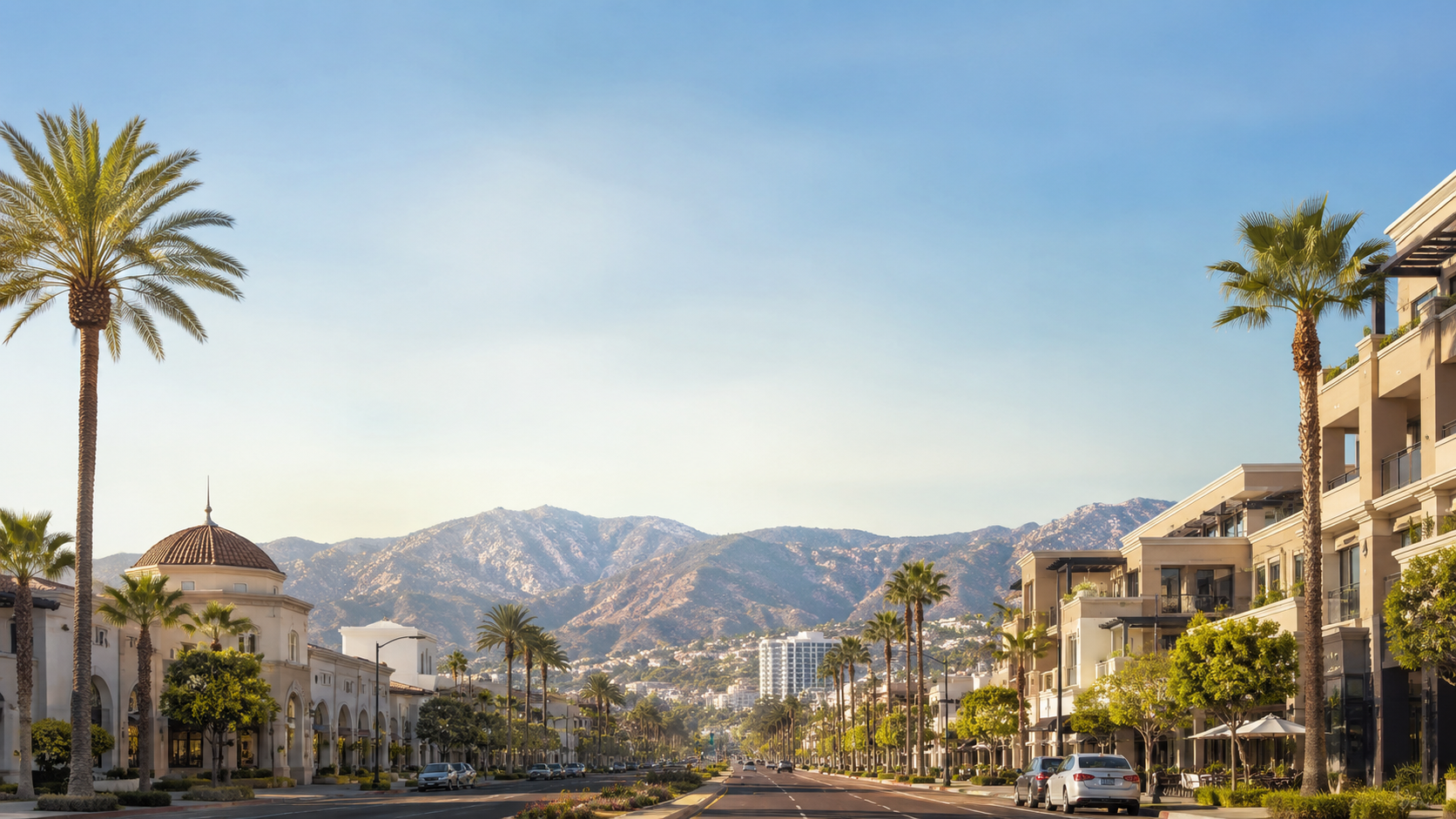
Living and buying in Glendale, CA
Glendale is a dynamic mid-sized suburb in Los Angeles County with 194,512 residents and a median household income of $81,219. The city sits at the intersection of suburban comfort and urban opportunity, offering a median home price of $992,000 alongside robust public transit options and excellent schools. Glendale attracts first-time buyers, families, and investors seeking diverse neighborhoods, cultural richness, and proximity to major employment centers. With over 43% of residents holding a bachelor's degree or higher, the city emphasizes education, diversity, and long-term stability.
Who should buy in Glendale
Glendale appeals to diverse buyer profiles seeking an established suburb with strong schools, diverse culture, and balanced lifestyle.
The median home price of $992k and 34.2% owner-occupancy rate show strong homeownership roots; neighborhoods like downtown Glendale offer entry-level condos around $600k.
Glendale has excellent public schools including Herbert Hoover High and R.D. White Elementary, plus family parks like Nibley Park and Casa Adobe de San Rafael Park.
Transit score of 31 and rental yield of 2.4 to 3.1% support solid long-term holds; diverse tenant base and consistent occupancy near downtown Brand Boulevard.
Downtown Glendale coffee shops like The Coffee Bean & Tea Leaf and Starbucks offer flexible workspaces; walkable retail and dining support hybrid schedules.
Glendale's median age of 42.5 and proximity to healthcare facilities (Glendale Medical Offices, Kaiser Permanente) suit active retirees seeking a walkable downtown.
Who should think twice
Glendale's car-dependent layout, moderate transit access, and higher unemployment rate may challenge buyers seeking urban walkability or tight job markets.
Best neighborhoods in Glendale
Glendale's neighborhoods range from walkable downtown Brand Boulevard shops to quiet residential enclaves in North Glendale and family-friendly east-side streets. Each area reflects the city's cultural diversity and mix of price points, from starter condos to luxury estates.
Each neighborhood in Glendale carries its own character while maintaining the city's core advantages: strong schools, cultural amenities, and proximity to major employment hubs. Downtown Brand Boulevard delivers walkability and urban energy, while North Glendale and East Glendale offer suburban tranquility and family-friendly infrastructure. South Glendale bridges the gap, mixing affordability with established community roots. Buyers should prioritize their lifestyle needs: those seeking walkability and dining should focus on downtown; families prioritizing schools and parks should explore North and East Glendale; investors may find better yields in South Glendale's rental-heavy blocks. A visit to multiple neighborhoods is essential before committing, as price premiums and safety grades shift noticeably within a few blocks.
All neighborhoods in Glendale
Browse detailed buyer guides for every Glendale neighborhood we cover, including local market data, walkability, schools, and lifestyle.
Glendale home prices and market data
Glendale's real estate market reflects strong fundamentals with a median home price of $992,000 and rental demand supporting modest appreciation. The market remains balanced, with modest month-to-month inventory and reasonable days on market for the Los Angeles metro area.
vs CA Median: +18% above California median | Inventory: 3.2 months
Real estate trends and forecast in Glendale
Glendale's market has appreciated modestly year-over-year at 2.3%, reflecting steady demand from families and investors despite broader Los Angeles cooling. The city's cultural diversity, strong schools, and studio presence continue to drive long-term appreciation.
GROWTH DRIVERS
- Proximity to major film and television studios (Disney Animation, Burbank Studios)
- School quality and diverse education options attracting families
- Downtown Glendale revitalization and Brand Boulevard retail growth
- Strong immigrant communities (particularly Armenian-American) supporting stability and rental demand
- Access to multiple freeways (I-5, I-210, Ventura) for regional commuters
RISK FACTORS
- Rising unemployment at 8.1% may soften future demand if local job market weakens
- Car dependency limits appeal to urbanist buyers; transit score of 31 restricts walkability-focused demographics
- Competition from nearby Burbank, Pasadena, and Glendale's own downtown condos may moderate single-family price growth
Glendale remains a solid long-term hold for investors and owner-occupants, with particular strength in North Glendale's family-focused subdivisions and Downtown Brand Boulevard condos. The city's cultural identity and school system provide foundation for 3 to 5% annual appreciation over the next decade, though recent cooling suggests pacing expectations conservatively. Rental yields of 2.4 to 3.1% support buy-and-hold strategies, especially for 2 to 3-bedroom homes in the $800k to $1.1m range. Buyers should monitor local unemployment trends; if jobs growth accelerates, prices in East and North Glendale could spike 5% to 8% annually, while downtown condos may see slower appreciation due to market saturation.
True cost of owning a home in Glendale
Monthly ownership costs for a $500k home in Glendale average $4,150 to $4,650, including mortgage, taxes, insurance, and maintenance reserves.
Mortgage, taxes, insurance, HOA, utilities, and maintenance add up fast. Use Ficustree’s True Cost of Ownership calculator to model the full monthly carrying cost for your specific price point, county, and loan terms before you commit.
For a quick anchor, a $500K home in Glendale typically runs around $4,105/month all-in. Income to qualify is roughly $164,200/yr with a 20% down payment of $100,000. Use the calculator above for your exact numbers.
Quality of life in Glendale
Glendale offers a solid quality of life with good schools, affordable healthcare access, and cultural amenities, though car dependency and moderate traffic reduce overall walkability scores. Residents enjoy low poverty rates (14.3%) and strong purchasing power relative to the Los Angeles metro average.
Climate: Mediterranean: warm, dry summers (85 to 95 degrees Fahrenheit) and mild winters (50 to 70 degrees Fahrenheit); 280+ sunny days annually.
Schools in Glendale
Glendale schools earn strong marks for diversity and academic rigor, with Herbert Hoover High and R.D. White Elementary leading public options. The district emphasizes arts integration, bilingual programs, and STEM pathways, attracting education-focused families.
Top Schools: Herbert Hoover High School, R.D. White Elementary, Woodrow Wilson Middle School
Private Options: Salem Lutheran School (K-8), Incarnation Parish School (K-8), Glendale Adventist Academy (K-12)
Is Glendale safe?
Glendale's violent crime rate sits near the national average, while property crime is slightly elevated due to urban density and freeway proximity. Safer pockets exist in North Glendale and East Glendale residential neighborhoods; downtown areas see higher petty crime.
Safest areas: North Glendale (Verdugo/Canada Boulevard corridor), East Glendale (Mountain Street and Lexington Drive areas), South Glendale (Bonita Drive neighborhoods)
Trend: stable | Watch: Downtown Brand Boulevard and Pacific Avenue corridors experience higher foot traffic and petty theft; avoid leaving valuables in parked cars. Property crime clusters near freeway on-ramps (I-5, I-210, Ventura Freeway).
Property taxes in Glendale
California Proposition 19 (2021) may trigger reassessment for high-value transfers; non-primary residence purchases face full market-rate assessment.
Honest buyer reality check
The honest take: Glendale's car-dependent layout and 8.1% unemployment rate introduce real headwinds for certain buyer profiles. While schools and cultural amenities are genuine strengths, buyers should expect 25 to 35-minute commutes to downtown Los Angeles or the Westside without carpools or transit use. Home prices have appreciated steadily, but recent market cooling suggests a 2 to 4% annual rate going forward, not the 5 to 7% seen 2015 to 2020. The city's walkability and biking infrastructure lag comparable California suburbs, making car ownership mandatory for most households.
Hidden costs buyers miss: Parking enforcement is strict downtown; expect $500 to $1,500 annually if you frequent Brand Boulevard. Vehicle registration and fuel costs are higher due to car dependency. Some neighborhoods lack street lighting; safety improvements may add $200 to $400 annually in home security systems. Seismic retrofitting requirements for older homes (built pre-1980) can cost $3,000 to $7,000.
Natural risks: Seismic activity: Glendale sits near the Verdugo Fault; earthquake risk is moderate to significant., Wildfire exposure: North Glendale neighborhoods adjacent to Verdugo Hills face elevated fire risk during Santa Ana wind season (October to April)., Flash flooding: North Glendale canyons and some South Glendale areas experience seasonal flash-flood potential during heavy rains.
Zoning watch: Downtown Glendale is shifting toward mixed-use, higher-density zoning; single-family neighborhoods are protected by R-1 zoning but face incremental pressure for accessory dwelling units (ADUs). New development on Brand Boulevard emphasizes commercial-residential blending, which may increase noise and traffic in immediately adjacent areas.
Unexpected cost factor: 12%
Nature and outdoor life
Glendale offers easy access to parks and hiking trails in the adjacent Verdugo Mountains and Griffith Park, though the city's urbanized core limits immediate green space. Residents enjoy seasonal wildflower blooms and cool canyon trails within 10 to 20 minutes of central neighborhoods.
Seasonal highlights: Spring wildflowers (March to May) bloom in canyon areas; fall foliage appears in Verdugo canyons (October to November); summer heat is tempered by canyon breezes, making dawn hikes popular.
Daily Life and Amenities in Glendale
Real named places within Glendale from Proximitii’s POI database.
- Muffin Can Stop Us · 19 min walk
- Herand's Kitchen · 20 min walk
- The Little Goat Pizza House · 20 min walk
- Crab Avenue · 24 min walk
- Conrads · 25 min walk
- Ozzy's Apizza · 26 min walk
- Starbucks · 15 min walk
- The Coffee Bean & Tea Leaf · 21 min walk
- Starbucks · 26 min walk
- Starbucks · 31 min walk
- It's Boba Time · 32 min walk
- Porto's Bakery and Cafe · 37 min walk
- Nibley Park · 21 min walk
- Casa Adobe de San Rafael Park · 22 min walk
- Verdugo Park · 29 min walk
- Catalina Verdugo Adobe Park · 31 min walk
- Verdugo Woodlands Elementary School · 33 min walk
- Doran Gardens Mini Park · 33 min walk
- Ralphs · 15 min walk
- Golden Market · 16 min walk
- Trader Joe's · 21 min walk
- Papaya Pastry USA · 27 min walk
- Pacific Bake House · 28 min walk
- Vons · 29 min walk
- Raymond & Annie Kouyoumdjian Hall · 27 min walk
- Glendale Civic Auditorium · 28 min walk
- total woman gym and spa · 30 min walk
- The Dads' Club · 32 min walk
- Bella Fitness · 36 min walk
- Training Mate · 44 min walk
- Letter "H" · 17 min walk
- Auditorium Building · 31 min walk
- Stars on Brand · 34 min walk
- Glendale Center Theater · 37 min walk
- Roslin Art Gallery · 38 min walk
- Alex Theatre · 40 min walk
Frequently asked questions about Glendale real estate
Is Glendale a good place to buy a home?
Yes, Glendale is a solid choice for families, investors, and remote workers seeking established schools, cultural diversity, and suburban stability near major employment hubs. The median home price of $992,000 reflects strong fundamentals, though car dependency and modest appreciation (2.3% YoY) require realistic expectations. Downtown Glendale offers walkability and nightlife, while North and East neighborhoods provide quiet family-friendly streets. The city's 43.8% bachelor's-degree-plus education rate and low poverty (14.3%) underscore community investment in long-term growth.
What is the average home price in Glendale?
The median home price in Glendale is $992,000 (as of the most recent data), with prices ranging from $650,000 for downtown condos to $1.5+ million for luxury North Glendale estates. Single-family homes average $950,000 to $1.1 million, while 2 to 3-bedroom rentals run $2,000 to $2,400 monthly. Prices are approximately 18% above the California median and reflect proximity to studios, schools, and the Verdugo Hills.
Which neighborhoods in Glendale are best for families?
North Glendale (Verdugo and Canada Boulevard areas) and East Glendale (Mountain Street corridor) are ideal for families, offering quiet streets, top-rated schools like Herbert Hoover High and R.D. White Elementary, and parks like Nibley Park and Verdugo Park. These neighborhoods have walk scores between 22 and 35, encouraging car travel but providing safe, established communities. South Glendale (Bonita Drive area) offers good schools and lower price points for budget-conscious buyers, while Downtown Brand Boulevard suits young professionals and empty-nesters prioritizing walkability over suburban quiet.
Is Glendale a safe place to live?
Glendale earns a B safety grade overall, with violent crime near the national average and property crime slightly elevated at index 118 (US average = 100). North and East Glendale neighborhoods are the safest, with low violent crime and established community watch programs. Downtown Brand Boulevard and Pacific Avenue experience higher petty theft and property crime due to foot traffic and freeway proximity; avoid leaving valuables in parked cars. The city's 64th percentile safety ranking (safer than 64% of California cities) places it squarely in the moderate-safety zone.
What is the cost of living in Glendale?
Glendale's cost of living is 18% above the California median. Monthly housing costs for a $500,000 home average $4,105 (including mortgage, taxes, insurance, and maintenance), requiring an annual household income of about $164,200. Median household income is $81,219, meaning many residents rent or purchase smaller homes. Utilities run $150 to $250 monthly; groceries are competitively priced at Ralphs, Trader Joe's, and Whole Foods; dining and entertainment on Brand Boulevard are moderately priced.
What are the schools like in Glendale?
Glendale schools average 7/10 on Great Schools ratings, with standouts including Herbert Hoover High, R.D. White Elementary, and Woodrow Wilson Middle School. The Glendale Unified School District emphasizes arts integration, bilingual programs, and STEM, attracting diverse families. Private options include Salem Lutheran School, Incarnation Parish School, and Glendale Adventist Academy. The district's 43.8% bachelor's-degree-plus adult rate reflects strong community investment in education, making schools a key draw for families considering relocation.
How much are property taxes in Glendale?
California's Proposition 13 caps property taxes at 1% of assessed value plus voter-approved bonds. Glendale's effective tax rate is 0.76% after voter-approved assessments, translating to approximately $3,800 annually on a $500,000 home. Los Angeles County's average supplemental tax runs 0.076%, so annual property taxes on a $992,000 median home approximate $7,500 to $8,000. Proposition 19 (2021) may trigger reassessment for high-value transfers and non-primary residence purchases at current market rates.
Is Glendale a good investment for real estate investors?
Glendale represents a HOLD for investors, offering stable 2.4 to 3.1% rental yields and modest 2.3% annual appreciation. Buy-and-hold investors should target North and East Glendale single-family homes in the $800k to $1.1m range, where rents support positive cash flow and family demand ensures consistent occupancy. Downtown condos ($600k to $800k) appeal to short-term flippers but face market saturation and slower appreciation. The city's diverse tenant base, strong schools, and cultural stability support long-term wealth-building, though expect 3 to 5% annual appreciation rather than double-digit growth. Monitor local employment trends; rising unemployment could soften future appreciation.
Where this Glendale data comes from
All numbers come from public, authoritative sources you can verify yourself. We pull median home values and demographic profiles from the U.S. Census Bureau, walk and transit ratings from Walk Score, school information from GreatSchools, and geographic boundaries from OpenStreetMap.
Discover Your Perfect Home in Glendale
Use our AI-powered search to explore Glendale neighborhoods, compare ownership costs, and connect with local experts who know this diverse community inside and out.
Search Glendale Homes →