Living in Long Beach: Waterfront Urban Community
Long Beach is a dynamic waterfront metropolis blending urban energy with coastal living and diverse neighborhoods.
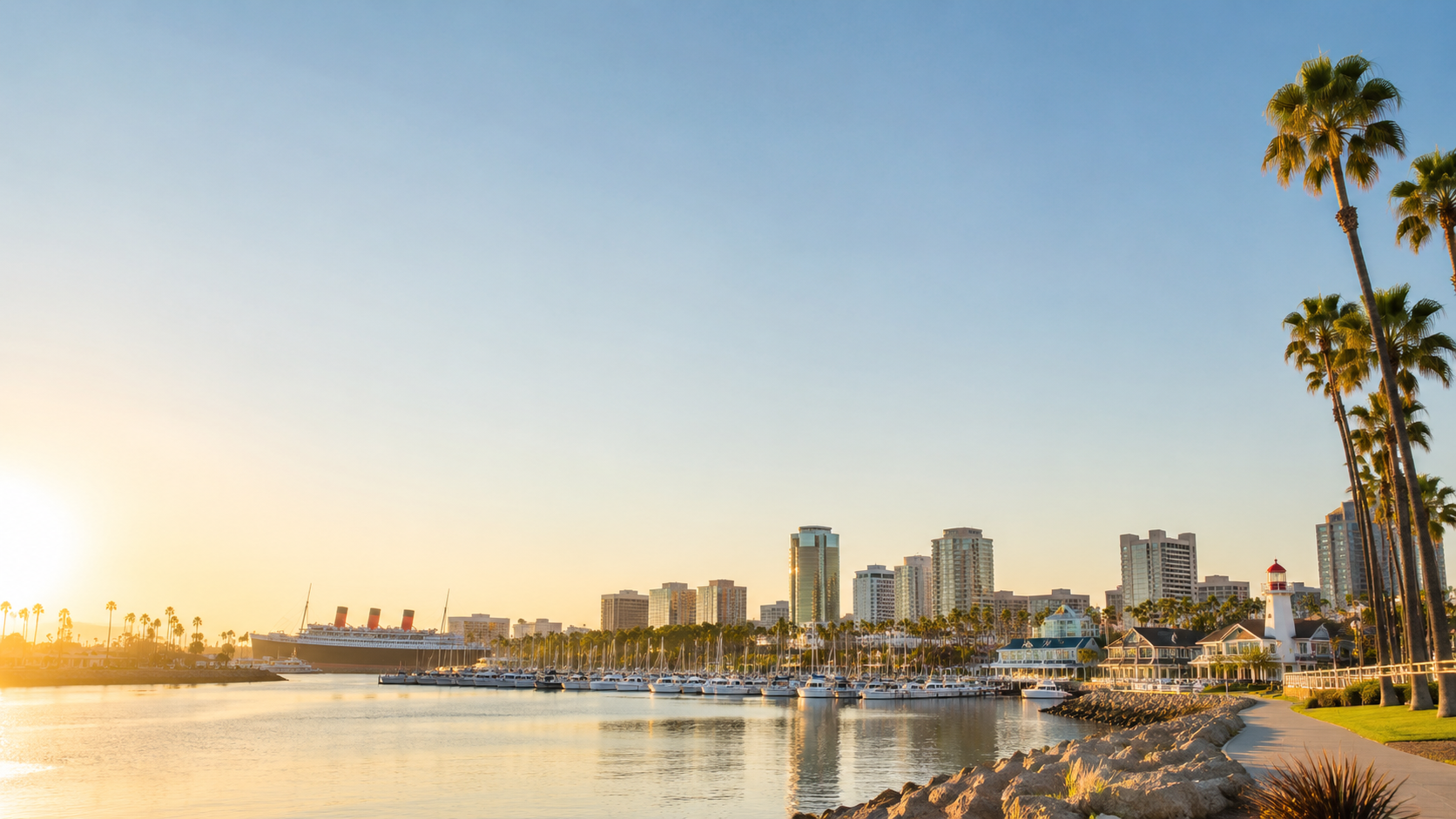
Living and buying in Long Beach, CA
Long Beach offers coastal sophistication with big-city energy. With a median home value of $709,700 and a population of 462,293, this waterfront city delivers excellent walkability (Walk Score 83), outstanding transit access (Transit Score 75), and a lifestyle that balances urban convenience with beach proximity. The city attracts first-time buyers, families, and investors seeking an established neighborhood with strong cultural institutions, diverse dining, and a revitalized downtown core. Long Beach combines affordability relative to coastal LA with modern urban planning, making it an increasingly popular choice for California homebuyers.
Who should buy in Long Beach
Long Beach appeals to urban-minded buyers who prioritize walkability, transit access, and cultural amenities over traditional suburban living.
Strong neighborhoods like Downtown and Bixby offer condo and townhome options in the $500k to $700k range with Walk Scores above 80 and reliable transit, reducing car dependency.
Access to diverse schools (Renaissance High School For The Arts, Chavez Elementary), waterfront parks including Lincoln Park and Harvey Milk Park, and family-friendly attractions like the Aquarium of the Pacific create a dynamic environment.
Median rent of $1,698/month and strong 4.8% to 5.2% rental yields, plus downtown revitalization and increasing commercial activity, support positive long-term appreciation.
Excellent walkability and bike infrastructure (Bike Score 79), vibrant coffee shops like Potholder Cafe and Motiva Juice Bar, plus urban lifestyle amenities let remote professionals work and live without car commutes.
Coastal proximity, cultural attractions, outstanding public transit reducing driving stress, and access to healthcare facilities and walkable dining and shopping create an active lifestyle.
Who should think twice
Long Beach's urban density, safety concerns in some neighborhoods, and limited single-family home inventory make it less ideal for privacy-focused buyers or those seeking suburban peace.
Best neighborhoods in Long Beach
Long Beach offers distinct neighborhoods ranging from vibrant downtown urban living to quieter residential enclaves inland. Each area carries its own character, price point, and walkability profile.
The neighborhood landscape in Long Beach reflects its diverse population and ongoing revitalization. Downtown remains the epicenter of urban energy with Walk Scores above 88, while Bixby Knolls offers traditional family appeal and higher safety ratings. Belmont Heights and East Village attract younger, design-conscious buyers seeking emerging areas with strong appreciation potential. Price premiums cluster around downtown, waterfront, and established residential zones like Bixby, while emerging neighborhoods offer entry points for investors. Walkability, transit access, and neighborhood-specific safety profiles should guide your choice, as conditions vary notably block to block.
All neighborhoods in Long Beach
Browse detailed buyer guides for every Long Beach neighborhood we cover, including local market data, walkability, schools, and lifestyle.
Long Beach home prices and market data
Long Beach's real estate market reflects a mature, walkable urban center with stable pricing and consistent rental demand. The median home value of $709,700 sits below broader LA County benchmarks while maintaining stronger fundamentals than inland suburbs.
vs CA Median: 12% above state median | Inventory: 4.2 months
Real estate trends and forecast in Long Beach
Long Beach experienced steady appreciation over the past decade as downtown revitalization and improved transit connectivity drove demand. The market has stabilized after pandemic-era volatility, with year-over-year growth around 3.2% reflecting cautious buyer sentiment in a higher-interest environment.
GROWTH DRIVERS
- Downtown revitalization and new mixed-use development
- Waterfront attractions and cultural institutions (Aquarium, Queen Mary)
- Strong public transit connectivity reducing car dependency
- Tech and creative sector growth attracting younger professionals
RISK FACTORS
- Coastal flood risk and long-term climate vulnerability
- Crime rates remain elevated in certain neighborhoods despite improvements
- Increasing interest rates cooling buyer demand in price-sensitive segments
Long Beach's market trajectory favors patient investors and owner-occupants seeking long-term appreciation. Downtown properties ($550k to $850k) remain hotly contested as tech workers and remote professionals recognize the walkability and cultural appeal; expect continued modest appreciation of 3% to 4% annually as revitalization matures. Outer neighborhoods like East Village and Belmont Heights offer emerging value, with potential 5% to 7% annual gains as infrastructure and amenities improve. Condo investors benefit from reliable 4.8% to 5.2% yields backed by 462,293 residents and 1,698/month median rent. However, rising sea-level concerns and periodic safety headlines may cap appreciation in the $850k+ price tier. A balanced approach targets entry at $550k to $700k in walkable, improving neighborhoods rather than fully-appreciated downtown corridors.
True cost of owning a home in Long Beach
Long Beach ownership costs run modestly higher than inland LA County due to demand, but remain competitive against westside and beach communities.
Mortgage, taxes, insurance, HOA, utilities, and maintenance add up fast. Use Ficustree’s True Cost of Ownership calculator to model the full monthly carrying cost for your specific price point, county, and loan terms before you commit.
For a quick anchor, a $500K home in Long Beach typically runs around $4,492/month all-in. Income to qualify is roughly $165,000 per year with a 20% down payment of $141,940. Use the calculator above for your exact numbers.
Quality of life in Long Beach
Long Beach delivers an 88/100 livability score driven by exceptional walkability, active lifestyle options, and cultural amenities. The city's urban density supports vibrant neighborhoods but brings tradeoffs in traffic, parking, and noise typical of established cities.
Climate: Mediterranean: warm, dry summers (75-85F) and mild winters (50-65F); minimal rain outside December to March; 280+ sunny days annually.
Schools in Long Beach
Long Beach Unified School District operates 86 schools serving 72,000+ students with average ratings of 7/10 on GreatSchools. Quality varies significantly by neighborhood, with downtown and Bixby-area schools typically outperforming inland schools.
Top Schools: Renaissance High School For The Arts, Edison Elementary, Chavez Elementary
Private Options: St Anthony High School, St Anthony Parish School, Montessori On Elm
Is Long Beach safe?
Long Beach crime rates exceed California and national averages, though recent initiatives and neighborhood-specific policing have stabilized violent crime. Safety profiles vary dramatically: downtown and waterfront areas register much lower rates than inland neighborhoods.
Safest areas: Bluff Heights, Bixby Knolls, Downtown Waterfront
Trend: Stable to improving | Watch: Inland neighborhoods north of Broadway and east of Cherry Avenue experience higher property and violent crime rates; research specific streets and blocks before purchasing.
Property taxes in Long Beach
Proposition 19 (2020) adjusts reassessment rules for inherited properties; consult a tax advisor for inheritance planning.
Honest buyer reality check
The honest take: Long Beach attracts savvy buyers willing to accept urban tradeoffs for walkability and culture. However, crime remains a real concern in certain neighborhoods, and coastal flood risk from sea-level rise presents a long-term liability many buyers underestimate. Parking scarcity, street noise, and limited single-family inventory further test suburban sensibilities. The city's revitalization is genuine and ongoing, but uneven: downtown thrives while inland zones lag in safety and amenities. Buyers should conduct granular neighborhood research and secure flood insurance before committing.
Hidden costs buyers miss: Condo buyers often overlook HOA increases; expect 3% to 5% annual rises. Street parking costs and traffic citations ($75 to $150) add up in dense neighborhoods. Basement and below-grade unit flooding from extreme weather is underpriced by most insurance models. Parking passes in some buildings run $150 to $250/month.
Natural risks: Sea-level rise and coastal flooding (affecting downtown and waterfront up to 2100), Periodic wildfires in foothill regions east of the city, Minor seismic activity typical of Southern California
Zoning watch: Mixed-use zoning allows commercial activity in residential blocks, increasing noise and traffic. Check for liquor licenses, entertainment venues, and commercial tenants within 200 feet of any purchase.
Unexpected cost factor: 15%
Nature and outdoor life
Long Beach's waterfront location delivers exceptional outdoor access, including the iconic Long Beach Harbor, beach parks, and inland greenspace. The city combines coastal recreation with urban parks supporting walking and biking.
Seasonal highlights: Best outdoor months: April to May (75-80F, wildflower blooms) and October to November (mild temps, clearer skies); summer is warm and beach-focused.
Daily Life and Amenities in Long Beach
Real named places within Long Beach from Proximitii’s POI database.
- Panini Kabob Grill · 3 min walk
- Jimmy John's · 3 min walk
- Flame Broiler · 4 min walk
- Sugar Taco · 4 min walk
- Alegria · 4 min walk
- L'Opera Italian · 4 min walk
- Potholder Cafe too · 2 min walk
- Motiva Juice Bar · 3 min walk
- Starbucks · 4 min walk
- Debbie's Cafe · 5 min walk
- Starbucks · 6 min walk
- Loose Leaf Boba Company · 8 min walk
- Lincoln Park · 2 min walk
- Pike Park · 6 min walk
- Promenade Square · 7 min walk
- Harvey Milk Park · 8 min walk
- Santa Cruz Park · 10 min walk
- Cesar Chavez Park · 11 min walk
- Saints & Sinners Bakeshop · 11 min walk
- El Super · 12 min walk
- Cassidy's Corner · 12 min walk
- Rainbow Seafood Market · 15 min walk
- Vons · 17 min walk
- Sinaloa Market · 19 min walk
- Crunch Fitness · 5 min walk
- Gold's Gym · 7 min walk
- Planet Fitness · 7 min walk
- 24 Hour Fitness · 7 min walk
- Jenny Oropeza Community Center · 12 min walk
- Long Beach Senior Center · 28 min walk
- Cinemark · 7 min walk
- Harvelle's · 7 min walk
- Internation city Theater · 9 min walk
- Laugh Factory · 9 min walk
- Aquarium of the Pacific · 12 min walk
- Dark Arts Emporium · 13 min walk
Frequently asked questions about Long Beach real estate
Is Long Beach a good place to buy a home?
Yes, Long Beach is an excellent choice for buyers prioritizing walkability, public transit, and urban amenities over suburban space. The city's 88/100 livability score, Walk Score of 83, and revitalized downtown attract young professionals, remote workers, and families willing to embrace density. However, crime rates above state averages and coastal flood risk require careful neighborhood selection and flood insurance. For buyer profiles valuing walkability, cultural access, and waterfront proximity, Long Beach delivers strong long-term fundamentals.
What is the average home price in Long Beach?
The median home price in Long Beach is $709,700, approximately 12% above the California state median. Condos average $525,000, while single-family homes range from $500k in emerging neighborhoods like East Village to $950k+ in established areas like Bixby Knolls. Rental prices average $1,450 for one-bedrooms and $2,100 for three-bedrooms, supporting 4.8% to 5.2% rental yields for investors.
Which Long Beach neighborhoods are best for families?
Bixby Knolls stands out for families, offering tree-lined streets, excellent schools, and a suburban feel within the city limits. Bluff Heights provides similar family appeal with ocean views and proximity to quality parks. Belmont Heights attracts younger families seeking walkability and emerging amenities. Downtown Long Beach is increasingly family-friendly, with waterfront parks and cultural attractions, though safety requires careful block-by-block research.
Is Long Beach safe to live in?
Long Beach's overall safety grade is C+, with violent and property crime indices 138 to 142 compared to the national average of 100. Downtown and waterfront neighborhoods (Bluff Heights, downtown core) maintain significantly lower crime rates, while inland zones north of Broadway experience elevated property and violent crime. Police presence and neighborhood investment have stabilized crime over the past five years, but buyers should research specific addresses and blocks before purchasing, particularly in neighborhoods east of Cherry Avenue.
What is the cost of living in Long Beach?
Long Beach cost of living runs 12% above the California average. A median household income of $78,995 supports the median home price of $709,700 with approximately 9 years of median income required for purchase. Monthly ownership costs for a $500k home total approximately $4,492 (mortgage, tax, insurance, HOA, utilities, maintenance). Renters pay $1,450 to $2,100 monthly depending on unit size. Overall, the city is less expensive than westside LA and beach communities but pricier than inland suburbs.
How are the schools in Long Beach?
Long Beach Unified School District averages 7/10 on GreatSchools, with notable variance by neighborhood. Renaissance High School For The Arts, Edison Elementary, and Chavez Elementary lead the district. Bixby and downtown-adjacent schools generally outperform inland neighborhoods. Private options include St Anthony High School and Montessori programs. Families prioritizing top-tier schools should research specific elementary and middle schools, as district averages mask significant quality gaps.
What are property taxes and HOA fees in Long Beach?
Long Beach property tax rate is 0.75% of assessed value, resulting in approximately $3,750 annually on a $500k home. No Mello-Roos assessments apply in most areas. HOA fees vary: condominiums average $300 to $500 monthly and typically increase 3% to 5% annually. Plan for total ownership costs (tax plus HOA) of roughly $450 to $750/month on a median-priced home, plus insurance and maintenance reserves.
Is Long Beach a good investment for rental properties?
Long Beach supports solid investment fundamentals: median rent of $1,698 monthly with occupancy rates above 95% create 4.8% to 5.2% gross rental yields. The 462,293-resident population and strong public transit support consistent tenant demand. Downtown and walkable neighborhoods (Belmont Heights, East Village) offer emerging appreciation potential of 5% to 7% annually, while established areas (Bixby) provide stability with 3% to 4% appreciation. However, rising interest rates and increasing sea-level concerns present headwinds. Target entry at $550k to $700k in improving, walkable neighborhoods for optimal risk-adjusted returns.
Where this Long Beach data comes from
All numbers come from public, authoritative sources you can verify yourself. We pull median home values and demographic profiles from the U.S. Census Bureau, walk and transit ratings from Walk Score, school information from GreatSchools, and geographic boundaries from OpenStreetMap.
Find Your Home in Long Beach with AI
Discover neighborhoods, investment potential, and ownership costs tailored to your profile. Start your Long Beach search today.
Search Long Beach Homes →