Why Buyers Love Riverside, California
A vibrant inland city balancing urban walkability with California affordability.
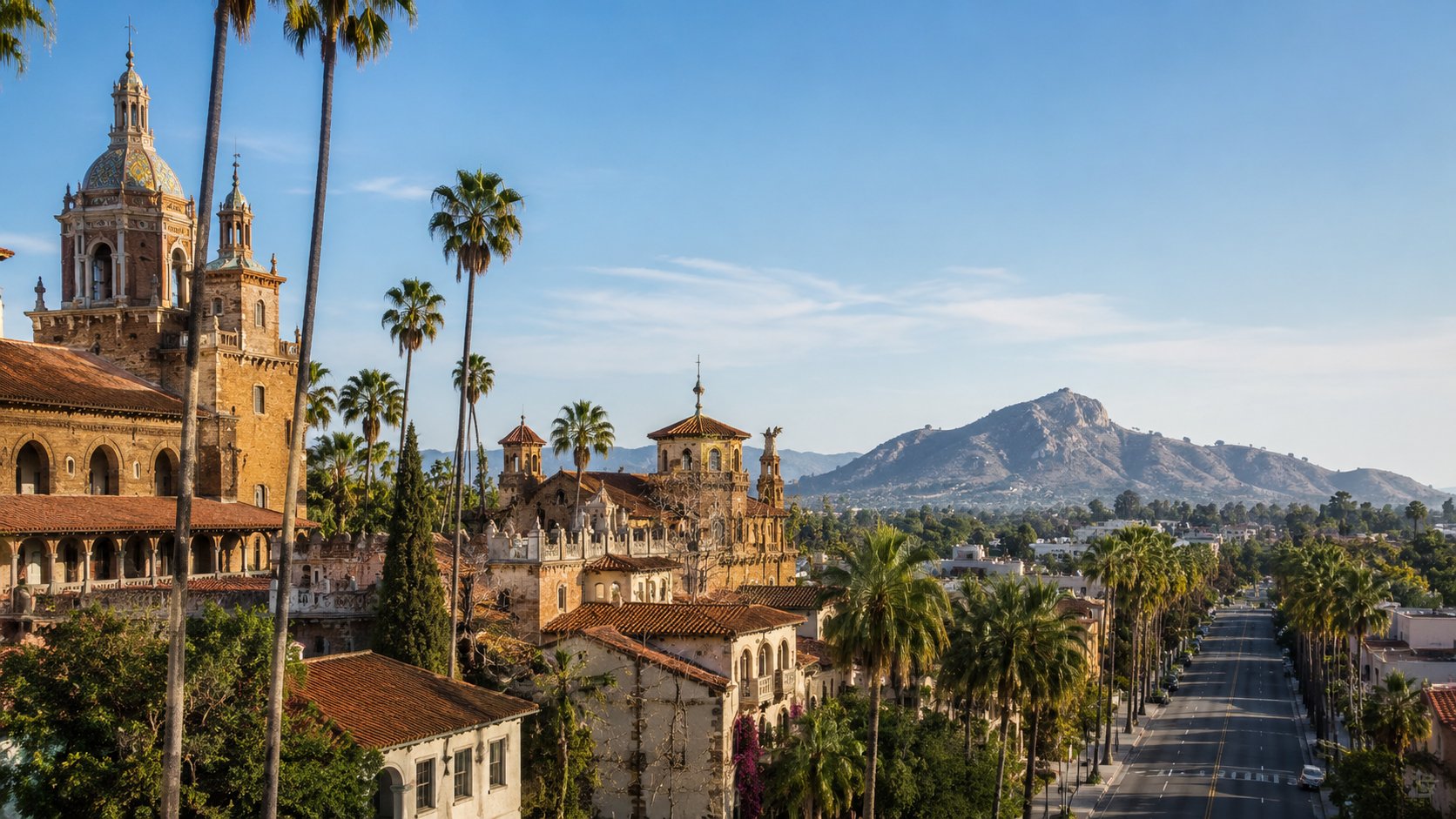
Living and buying in Riverside, CA
Riverside offers a rare blend of urban walkability, affordability, and job accessibility in Southern California. With a median home price of $485,500 and a very walkable downtown core (walk score 83), the city attracts first-time buyers, families, and remote workers seeking more space without sacrificing lifestyle. The median household income of $83,448 reflects a growing professional workforce, while the 55.5% owner-occupancy rate signals strong community roots and confidence in the local market. From heritage neighborhoods to newly revitalized districts, Riverside delivers genuine California living at a fraction of coastal premiums.
Who should buy in Riverside
Riverside suits a diverse buyer base from first-time homeowners to investors seeking California affordability without compromising walkability or job access.
Median prices 20% below coastal Southern California, strong down-payment assistance programs, and abundant sub-$400k inventory in walkable neighborhoods.
Good schools, 32.3% of nearby population has children, multiple parks (Shamel Park, Low Park), and family-friendly neighborhoods with reasonable commute times.
Rental yield 4.2 to 5.1%, strong renter demand, and emerging revitalization creating upside in downtown and transit-adjacent corridors.
Very walkable downtown (score 83), excellent bike infrastructure (score 70), diverse coffee shops and coworking options, quieter than LA but still urban.
Affordable housing, strong healthcare (Riverside Medical Center, Pacific Grove Hospital), walkable main streets, and active adult communities in nearby areas.
Who should think twice
Riverside demands careful neighborhood selection and realistic expectations about transit and commute times to coastal employment.
Best neighborhoods in Riverside
Riverside's neighborhoods range from walkable historic cores to emerging suburban communities. Each area offers distinct character, price points, and lifestyle benefits; smart buyers focus on proximity to employment, schools, and transit hubs.
Riverside's neighborhood diversity means buyer success hinges on matching personal priorities to location. Downtown and Arlington Heights suit urbanites and remote workers; Magnolia and Pachappa appeal to families and retirees valuing stability. Mount Rubidoux commands premium prices for hillside character and privacy. All neighborhoods benefit from Riverside's improving economic fundamentals, but savvy buyers perform granular due diligence on schools, walkability, and local amenities before committing.
All neighborhoods in Riverside
Browse detailed buyer guides for every Riverside neighborhood we cover, including local market data, walkability, schools, and lifestyle.
- Arlanza
- Arlington
- Arlington Heights
- Arlington South
- Arlington Station
- Bannockburn Village
- Belltown
- Belvedere Heights
- Canyon Crest
- Casa Blanca
- Downtown Riverside
- Eastside
- Grand
- Hawarden Hills
- Magnolia Avenue
- Magnolia Center
- Mission Grove
- Pachappa
- Prenda
- Presidential Park
- Ramona
- Riverside Junction
- Rubidoux
- University
- Victoria
- Wood Streets
- Woodcrest
Riverside home prices and market data
Riverside's median home price of $485,500 has appreciated steadily, positioning it as an attractive entry point for Southern California buyers. Inventory remains healthy, with days on market averaging 28 to 35 days, reflecting a balanced market leaning slightly toward buyers in slower seasons.
vs CA Median: 23% below California median of $630k | Inventory: 4.2 months
Real estate trends and forecast in Riverside
Riverside is in a moderate growth phase, supported by inland migration, job creation, and transit investments. The market remains balanced with slight buyer advantage in off-peak seasons, though desirable neighborhoods move quickly.
GROWTH DRIVERS
- Inland population migration from coastal Orange County and LA
- Revitalization of downtown and historic neighborhoods
- Expanding employment centers and remote work adoption
- Metrolink rail access and planned transit improvements
RISK FACTORS
- Interest rate sensitivity in a price-constrained market
- Inland water scarcity and drought concerns in long term
Riverside's steady appreciation (18.7% over five years) reflects supply-demand fundamentals favoring patient buyers and holders. Downtown and Arlington Heights neighborhoods show strongest momentum as revitalization attracts younger professionals. Families continue anchoring demand in Magnolia and Pachappa. Interest-rate-sensitive buyers may encounter slight softness in peak seasons, but long-term fundamentals support 3 to 5% annual appreciation. Investors with 5+ year horizons can expect solid yields combined with moderate capital appreciation, particularly in sub-$450k turnkey rentals.
True cost of owning a home in Riverside
A $485,500 home in Riverside carries meaningful but manageable monthly ownership costs, approximately $3,240 all-in with property tax, insurance, and maintenance reserve.
Mortgage, taxes, insurance, HOA, utilities, and maintenance add up fast. Use Ficustree’s True Cost of Ownership calculator to model the full monthly carrying cost for your specific price point, county, and loan terms before you commit.
For a quick anchor, a $500K home in Riverside typically runs around $3,220/month all-in. Income to qualify is roughly $127,000/yr with a 20% down payment of $97,100. Use the calculator above for your exact numbers.
Quality of life in Riverside
Riverside delivers strong walkability and active living with a 78/100 livability score, excellent park access, and emerging cultural amenities. The trade-off is reliance on cars for longer trips and summer heat exposure.
Climate: Mediterranean: warm dry summers (90-102F), mild winters (45-70F), minimal rainfall outside November to March.
Schools in Riverside
Riverside Unified School District serves the majority of students and rates 7/10 on GreatSchools, with wide variation across schools. Top-rated elementary and high schools concentrate in Magnolia and Pachappa; private options add choice.
Top Schools: Notre Dame High School (private, K-12), Pachappa Elementary, Ramona High School, St. Catherine of Alexandria School (private)
Private Options: Notre Dame High School, St. Catherine of Alexandria School, Riverside Montessori Academy, California School for the Deaf, Riverside
Is Riverside safe?
Riverside's overall crime grade is B, with a violent crime index of 115 (15% above US average) and property crime index of 105 (5% above US average). Crime concentrates in specific neighborhoods; downtown and northeast areas trend safer than south and central districts.
Safest areas: Mount Rubidoux, Pachappa, Magnolia District
Trend: stable | Watch: South Riverside and portions of Arlington Heights experience higher property crime; walk-throughs and neighborhood tours at different hours recommended before purchase.
Property taxes in Riverside
Proposition 19 (2020) subjects certain inherited properties to reassessment; consult a tax advisor if inheriting in-state property.
Honest buyer reality check
The honest take: Riverside is not immune to inland California's structural challenges. Buyers must accept summer heat exceeding 100F regularly, occasional air quality concerns during fire season, and reliance on personal vehicles despite good walkability in downtown cores. School quality varies dramatically by zip code, requiring neighborhood-specific due diligence. While appreciation has been solid, Riverside competes with Victorville, Temecula, and Inland Empire peers; market saturation could slow gains if migration trends reverse.
Hidden costs buyers miss: Homeowners often underestimate cooling costs (electric bills frequently $200+ in July-August), mandatory solar installations in new construction, and Mello-Roos assessments in some subdivisions. Water restrictions and possible rate hikes loom long-term. Title insurance, inspections, and appraisals add 1 to 2% beyond down payment.
Natural risks: Wildfire exposure (especially foothills and Mount Rubidoux areas), Drought and water supply uncertainty (long-term regional risk), Occasional wind and dust storms in spring
Zoning watch: Industrial and commercial corridors border some residential areas; freight rail lines run through downtown; verify zoning and easements for noise and truck traffic near properties.
Unexpected cost factor: 8 to 12%
Nature and outdoor life
Riverside offers strong park access and outdoor recreation despite inland heat. Shamel Park, Low Park, and A.D. Shamel Park provide walking trails, playgrounds, and green space within short distances of downtown.
Seasonal highlights: Spring wildflower blooms (March-April) on hillsides; summer outdoor movies and concerts in downtown; fall temperatures ideal for hiking; winter mild enough for year-round walking.
Daily Life and Amenities in Riverside
Real named places within Riverside from Proximitii’s POI database.
- Devereaux House · 4 min walk
- Angel Thai Cuisine · 5 min walk
- Little Green Onions · 6 min walk
- Dairy Queen · 8 min walk
- Baskin-Robbins · 9 min walk
- Alvaro's Mexican Food · 9 min walk
- Starbucks · 3 min walk
- Backstreet Cafe · 4 min walk
- Kraemers Koffee Bistro · 6 min walk
- Kung Fu Tea · 10 min walk
- Condron Coffee · 12 min walk
- Crave Coffee and Tea · 12 min walk
- Shamel Park · 5 min walk
- A D Shamel Park · 6 min walk
- Low Park · 7 min walk
- Low Park · 7 min walk
- Low Park · 7 min walk
- Parent Washington Navel Orange Tree · 9 min walk
- Riverside Cookie Shoppe · 5 min walk
- Vons · 15 min walk
- Pier 76 · 16 min walk
- Trader Joe's · 18 min walk
- Ralphs · 20 min walk
- Yum Yum Donuts · 22 min walk
- t3 Fitness · 6 min walk
- Animal House Fitness · 16 min walk
- LA Fitness · 16 min walk
- Ysmael Villegas Community Center · 25 min walk
- 24 Hour Fitness · 27 min walk
- 24 Hour Fitness · 27 min walk
- VIP Nightclub · 16 min walk
- Regal Riverside Plaza · 17 min walk
- Southern California Medical Museum · 24 min walk
- Heritage House · 46 min walk
- Wheelock Stadium · 50 min walk
- Martha Mclean Anza Narrows · 59 min walk
Frequently asked questions about Riverside real estate
Is Riverside a good place to buy a home?
Yes, if you prioritize affordability, walkability in select neighborhoods, and job access to inland markets. Riverside's median home price of $485,500 is 23% below California's median, with strong schools in Magnolia and downtown revitalization attracting buyers. The city works best for remote workers, families seeking stable neighborhoods, and first-time buyers building equity. However, buyers reliant on coastal employment or seeking year-round mild weather should weigh commute and heat trade-offs carefully.
What is the average home price in Riverside?
The median home price in Riverside is $485,500, with price per square foot averaging $290. Condos average $385,000, while single-family homes range from $350k in developing areas to $680k+ in premium neighborhoods like Mount Rubidoux. Downtown lofts and renovated historic homes command $450k to $550k.
What are the best neighborhoods to buy in Riverside?
Downtown Riverside and Arlington Heights suit walkable urban living and first-time buyers ($350k to $520k range). Magnolia and Pachappa appeal to families, with top-rated schools and quiet streets ($420k to $580k). Mount Rubidoux offers views and character for upscale buyers ($520k to $680k). Each neighborhood's crime rate, school quality, and walkability vary; direct comparison of local crime stats and school ratings is essential before committing.
Is Riverside safe?
Riverside grades B overall for safety, with violent crime 15% above US average and property crime 5% above average. Safer neighborhoods include Mount Rubidoux, Pachappa, and Magnolia; south and central Riverside experience higher crime. Police presence and neighborhood watch programs are active. Walking downtown during daytime is generally safe; nighttime caution recommended in some blocks. Visit neighborhoods at different hours and review local crime maps before purchase.
What is the cost of living in Riverside compared to Southern California?
Riverside is significantly more affordable than Los Angeles, San Diego, and Orange County coastal areas. Median household income of $83,448 supports median home prices 23% below state average. Groceries, utilities, and services cost slightly less than coastal markets, though gasoline and auto maintenance are unavoidable expenses. Rental apartments (1-bedroom averaging $1,450) offer better value than San Diego or LA, attracting renters and investors.
How are schools in Riverside?
Riverside Unified School District rates 7/10 on GreatSchools with highly variable performance by school and neighborhood. Top-rated elementary schools (Pachappa Elementary, Madison Elementary) and high schools (Notre Dame, Ramona) are concentrated in Magnolia and Pachappa areas and drive premium home prices. Private schools including Notre Dame High School and St. Catherine of Alexandria provide alternatives. Researching individual school ratings and recent test scores is critical; do not rely on district averages.
What is the property tax rate in Riverside?
Riverside County's property tax rate is 0.76% of assessed value. On a $485,500 home, expect approximately $3,620 annually or $302 monthly in property tax. Some subdivisions assess Mello-Roos community facility fees ($50 to $150 annually) for infrastructure improvements. Proposition 19 (2020) affects inherited properties; inherited homes no longer qualify for parent-to-child exemptions and may face reassessment and higher taxes.
Is Riverside a good investment?
Riverside is rated HOLD for investors, with rental yield 4.2 to 5.1% and five-year appreciation of 18.7%. Strong demand from inland migrants and remote workers supports rents; sub-$450k turnkey rentals in Arlington Heights and downtown show solid cashflow. Long-term fundamentals are sound (population growth, job creation, transit investment), but saturated supply in Inland Empire and interest-rate sensitivity require due diligence. 5+ year holding periods and properties with strong neighborhood fundamentals offer best returns.
Where this Riverside data comes from
All numbers come from public, authoritative sources you can verify yourself. We pull median home values and demographic profiles from the U.S. Census Bureau, walk and transit ratings from Walk Score, school information from GreatSchools, and geographic boundaries from OpenStreetMap.
Find Your Next Home in Riverside with AI
Use Ficustree's intelligent search and neighborhood matching tools to discover walkable, affordable homes in Riverside tailored to your budget, lifestyle, and investment goals.
Search Riverside Homes →