Why Buyers Love San Jose, California
Silicon Valley's dynamic urban core, blending tech-sector wealth with walkable neighborhoods and cultural depth.
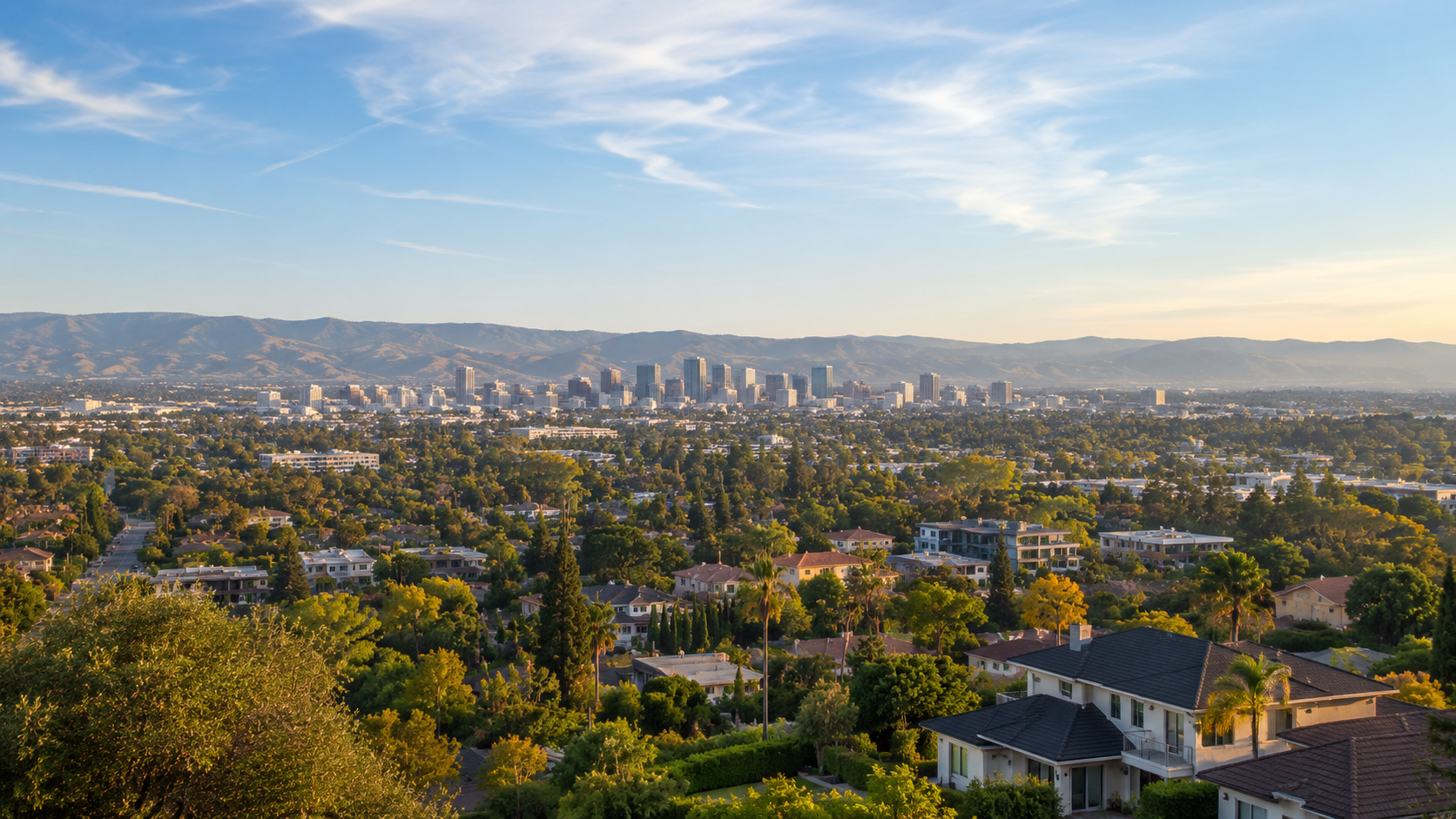
Living and buying in San Jose, CA
San Jose stands as Silicon Valley's premier residential and commercial hub, where high-earning tech professionals, growing families, and savvy investors converge. With a median home value of $1,149,600 and a walk score of 87, the city delivers both urban convenience and strong economic fundamentals. The market is shaped by robust job growth, an educated workforce with 46% holding bachelor's degrees or higher, and exceptional transit access via VTA buses and Caltrain. Whether you're a first-time buyer, a family seeking good schools, or an investor hunting rental yield, San Jose offers compelling opportunities backed by decades of consistent appreciation.
Who should buy in San Jose
San Jose appeals to diverse buyer profiles: tech professionals, growing families, investors, and remote workers seeking urban walkability paired with Silicon Valley job access.
Entry-level condos and townhomes start under $800k; strong appreciation history and walkable neighborhoods reduce car dependency and lifestyle costs.
Excellent public schools, parks like Guadalupe River Park and Arena Green, childcare options, and mixed-income neighborhoods support family life.
3.2 to 4.1% rental yield, strong tenant demand from tech workers, and consistent 5 to 10-year appreciation make San Jose a proven wealth builder.
Walk score of 87, transit score of 72, and dozens of coffee shops like Bel Bacio and The Almaden Cafe support flexible work; downtown redevelopment adds amenities.
Mild year-round climate, healthcare access via One Medical and major hospitals, cultural events at SAP Center, and low-maintenance condos reduce upkeep burden.
Who should think twice
Buyers seeking affordability, suburban sprawl, or quiet small-town vibes may find San Jose's urban density and high costs challenging.
Best neighborhoods in San Jose
San Jose spans diverse neighborhoods, from vibrant downtown and historic districts to suburban family enclaves and upscale hillside communities. Each offers distinct character, price points, and lifestyle benefits.
San Jose's neighborhood mosaic caters to multiple buyer archetypes. Downtown and nearby districts suit young urban professionals and remote workers who value walkability and nightlife. Willow Glen and Rose Garden appeal to families seeking tree-lined streets, local schools, and community cohesion. Almaden Valley and the west side attract affluent buyers with larger homes and hillside views. Investors find opportunity in East Side and emerging neighborhoods where rent growth outpaces price appreciation. Most neighborhoods enjoy access to parks like Guadalupe River Park and Pellier Park, plus transit hubs near San Jose Diridon Station.
All neighborhoods in San Jose
Browse detailed buyer guides for every San Jose neighborhood we cover, including local market data, walkability, schools, and lifestyle.
- Almaden Valley
- Alum Rock
- Branham
- Buena Vista
- Civic Center
- College Park
- Communications Hill
- Downtown Historic District
- Edenvale
- Evergreen
- Fruitdale
- Hensley Historic District
- Highland East
- Japantown
- Little Italy
- Little Portugal
- Little Saigon
- Luna Park
- Meadowfair
- Naglee Park
- Newhall
- Parkview
- Rose Garden
- Saint James Square Historic District
- Seven Trees
- Silver Creek
- SoFA
- Spartan Keyes
- Washington
- Willow Glen
San Jose home prices and market data
San Jose's market remains competitive and supply-constrained. Median prices have climbed steadily, reflecting strong tech-sector demand and limited inventory turnover.
vs CA Median: 38% above California median of $835k | Inventory: 1.8 months
Real estate trends and forecast in San Jose
San Jose's housing market has recovered from pandemic lows and is experiencing steady growth driven by tech hiring, venture capital influx, and limited new inventory. Prices have appreciated roughly 35 to 45% over the past decade, with 2023 and 2024 showing modest annual gains of 3 to 5% as interest rates stabilize.
GROWTH DRIVERS
- Persistent tech company headquarters and remote-work talent concentration
- Venture capital and startup ecosystem expansion
- Limited housing supply and infill development constraints
RISK FACTORS
- Economic slowdown in tech sector could reduce job demand
- Rising interest rates may dampen buyer affordability
San Jose is positioned for continued appreciation, though at a more measured pace than the 2010 to 2020 boom. Downtown neighborhoods near Diridon Station and the transit corridor offer strong upside as transit-oriented development accelerates. East Side and Alviso areas remain affordable entry points for investors hunting 4 to 5% gross yields. Willow Glen and west-side homes appeal to high-income buyers seeking stability and neighborhood prestige. Interest-rate sensitivity remains a key variable; any decline in rates would likely trigger a new wave of competitive bidding.
True cost of owning a home in San Jose
Owning a typical home in San Jose demands strong household income and liquid reserves; expect total monthly costs of $7,200 to $8,500 for a mid-range property.
Mortgage, taxes, insurance, HOA, utilities, and maintenance add up fast. Use Ficustree’s True Cost of Ownership calculator to model the full monthly carrying cost for your specific price point, county, and loan terms before you commit.
For a quick anchor, a $500K home in San Jose typically runs around $4,742/month all-in. Income to qualify is roughly $187,680 annually (28% front-end ratio) with a 20% down payment of $229,920. Use the calculator above for your exact numbers.
Quality of life in San Jose
San Jose delivers a high quality of life anchored by urban walkability, excellent transit, and strong healthcare infrastructure. The cost of living is steep, but amenities and job opportunities offset expenses for most residents.
Climate: Mediterranean: warm, dry summers (75 to 90 degrees), mild winters (45 to 60 degrees); 300+ sunny days per year.
Schools in San Jose
San Jose schools span public, charter, and private options with moderate to strong ratings. The best schools cluster in west and north neighborhoods; east side schools show more variability but are improving.
Top Schools: Palo Verde Elementary (west side, 8/10), Westmont High School (Evergreen district, 7/10), Lincoln High School (Abraham Lincoln HS, 6.5/10)
Private Options: Notre Dame High School (596 S 2nd St, college prep focus), St. Leo the Great School (1051 W San Fernando St, K-8), Basis Independent Silicon Valley (STEM emphasis)
Is San Jose safe?
San Jose's crime profile mirrors most large West Coast cities: property crime exceeds violent crime, but safer neighborhoods exist throughout. Downtown and east side corridors warrant awareness, while west and north neighborhoods enjoy lower incident rates.
Safest areas: Almaden Valley, Willow Glen, Rose Garden, Evergreen areas
Trend: stable | Watch: Downtown, East Side, and areas near I-880 see elevated property crime; remain alert to car break-ins and package theft. Police presence and community programs are active.
Property taxes in San Jose
Prop 19 allows reassessment upon change of ownership; new buyers should expect full market-rate property tax.
Honest buyer reality check
The honest take: San Jose is an excellent long-term hold for stable buyers with solid income, but it is not a get-rich-quick investment. Entry prices above $1M mean one bad year of job loss or medical emergency can trigger distress. The market is competitive; buyers often waive inspections or offer all-cash, raising risk. Rising rents do support investor returns, but tenant protections in California limit upside and require active management. Interest rate sensitivity is real; a 1% jump in mortgage rates can dampen demand and slow price growth.
Hidden costs buyers miss: Buyers often underestimate HOA fees (up to $600/month in condos), earthquake insurance (required by many lenders, $1,200 to $2,000 annually), and Mello-Roos assessments. Deferred maintenance in older neighborhoods can mean $15,000 to $40,000 in repairs post-purchase. Property tax reassessments and assessment bonds can catch new owners off guard.
Natural risks: Earthquake risk: Bay Area sits on or near major fault lines; homeowners insurance must cover seismic activity, Wildfire smoke: October and November bring air quality concerns from northern California fires
Zoning watch: Mixed-use zoning downtown and near Diridon Station is driving new development; check local planning documents to confirm no industrial rezoning near your target home.
Unexpected cost factor: 8 to 12% of purchase price annually for taxes, insurance, HOA, utilities, and maintenance combined.
Nature and outdoor life
San Jose offers abundant parks, trail systems, and river access for outdoor recreation. Downtown sits steps from Guadalupe River Park; west and south areas provide hiking and nature trails.
Seasonal highlights: Spring wildflowers in Almaden Valley and Coyote Creek; summer concerts at parks; fall foliage along creek corridors.
Daily Life and Amenities in San Jose
Real named places within San Jose from Proximitii’s POI database.
- The Grill at SAP Center · 3 min walk
- Alaska Airlines Club · 3 min walk
- Ancora Vino · 4 min walk
- Bibo’s · 4 min walk
- Poor House Bistro · 4 min walk
- Henry’s Hi-Life · 5 min walk
- Bel Bacio · 5 min walk
- The Almaden Cafe · 7 min walk
- Dr.ink · 8 min walk
- HannaH · 8 min walk
- Urban Ritual · 9 min walk
- ID Cafe · 10 min walk
- Arena Green · 1 min walk
- Guadalupe River Park · 7 min walk
- John P. McEnery Park · 8 min walk
- Guadalupe River Park · 10 min walk
- Pellier Park · 10 min walk
- Cahill Park · 11 min walk
- Whole Foods Market · 7 min walk
- Greenlee’s · 16 min walk
- Sprouts Farmers Market · 17 min walk
- Trader Joe's · 19 min walk
- Queen’s Donuts · 20 min walk
- Cinnaholic San Jose · 21 min walk
- CycleBar · 6 min walk
- Parabellum Training Center · 6 min walk
- CorePower Yoga · 8 min walk
- Red Dot Fitness · 10 min walk
- Orangetheory Fitness · 11 min walk
- Imago Fitness · 12 min walk
- SAP Center · 2 min walk
- Little Italy Museum and Cultural Center · 4 min walk
- Luis María Peralta Adobe · 9 min walk
- Carmel and Thomas Fallon House · 10 min walk
- Tabard Theatre · 10 min walk
- Spearmint Rhinos Gentlemens Club · 12 min walk
Frequently asked questions about San Jose real estate
Is San Jose a good place to buy a home?
Yes, San Jose is an excellent long-term investment for buyers with stable income and at least $230,000 for a down payment. The city offers strong job growth in tech, walkable neighborhoods, excellent transit, and consistent home appreciation averaging 3 to 4% annually. However, the median home price of $1,149,600 puts it out of reach for many first-time buyers without substantial savings. Families seeking good schools, retirees wanting walkability, and tech professionals all thrive here; the trade-off is high cost of living and competitive market conditions.
What is the average home price in San Jose?
The median home price in San Jose is $1,149,600 as of 2024. Condos and townhomes average $775,000, while single-family homes range from $950,000 in east neighborhoods to $2.5 million in Almaden Valley. Prices vary by neighborhood, age, and proximity to transit; downtown lofts near Diridon Station command premium per-square-foot rates compared to suburban south-side homes.
What are the best neighborhoods in San Jose for families?
Willow Glen, Rose Garden, and Almaden Valley are top family choices. Willow Glen offers walkable streets, local schools, and excellent parks. Rose Garden provides established residential stability and good schools. Almaden Valley attracts affluent families seeking newer homes and suburban space. East Side neighborhoods like the Alviso area are more affordable and also family-friendly with improving schools and growing amenities.
Is San Jose safe?
San Jose carries a 'B' safety grade overall. Safer neighborhoods include Almaden Valley, Willow Glen, Rose Garden, and north-side areas with lower crime indices. Downtown and east-side corridors see higher property crime and require standard urban awareness. Violent crime is below the national average. Like any major city, neighborhood selection and personal security habits matter more than the city's overall designation.
What is the cost of living in San Jose?
San Jose's cost of living is 35 to 40% above the national average. Housing dominates the budget: median rent for a 1-bedroom is $2,100 and a 3-bedroom is $3,200. Utilities, groceries, and transportation are also pricier. However, median household income of $136,010 is substantially higher, and tech salaries often exceed six figures, offsetting expenses for many residents. Retirees on fixed income and service workers may find affordability challenging.
How is the commute from San Jose?
San Jose's transit score of 72 and bike score of 89 make commuting by bus, train, or bike viable. VTA buses connect most neighborhoods; Caltrain links downtown to San Francisco and southern Peninsula. Car commutes during peak hours (7 to 9 AM, 4 to 7 PM) are often slow on I-880 and I-280. Remote workers and those with flexible schedules avoid peak congestion. Downtown and areas near transit hubs reduce car dependency significantly.
What is the property tax in San Jose?
Santa Clara County's property tax rate is 0.76% of assessed value. For a $1.15 million home, that equals roughly $8,738 annually. Prop 13 limits increases to 2% per year unless the home is sold; Prop 19 allows reassessment upon change of ownership, so new buyers pay full market-rate tax immediately. Some neighborhoods have Mello-Roos assessments adding 0.1 to 0.3% extra. Always factor in property tax when calculating monthly ownership costs.
Is San Jose a good investment?
San Jose is a strong buy for investors targeting 3.2 to 4.1% gross rental yield and long-term capital appreciation. Tech sector employment and remote-work talent flow drive persistent tenant demand. Single-family homes and small multifamily properties in Willow Glen, Rose Garden, and East Side offer balanced risk-return profiles. Condos near downtown and transit perform well too. Expect competition in bidding, due diligence, and active property management; passive buy-and-rent models may underperform compared to hands-on operators.
Where this San Jose data comes from
All numbers come from public, authoritative sources you can verify yourself. We pull median home values and demographic profiles from the U.S. Census Bureau, walk and transit ratings from Walk Score, school information from GreatSchools, and geographic boundaries from OpenStreetMap.
Find Your Home in San Jose with AI-Powered Insights
Get personalized listings, neighborhood deep-dives, and investment analysis tailored to your goals and budget. Start your San Jose home search today.
Search San Jose Homes →