
Finding a platform that represents buyers and reduces closing costs with clear fee and rebate structures is harder than it should be. Many platforms only operate in select states or restrict rebates, forcing buyers to coordinate multiple services or miss out on savings. This comparison covers rebates, fee models, and coverage so you can choose a home buyer representation platform that aligns with your savings goals.
Table of Contents
Ficustree
At a Glance
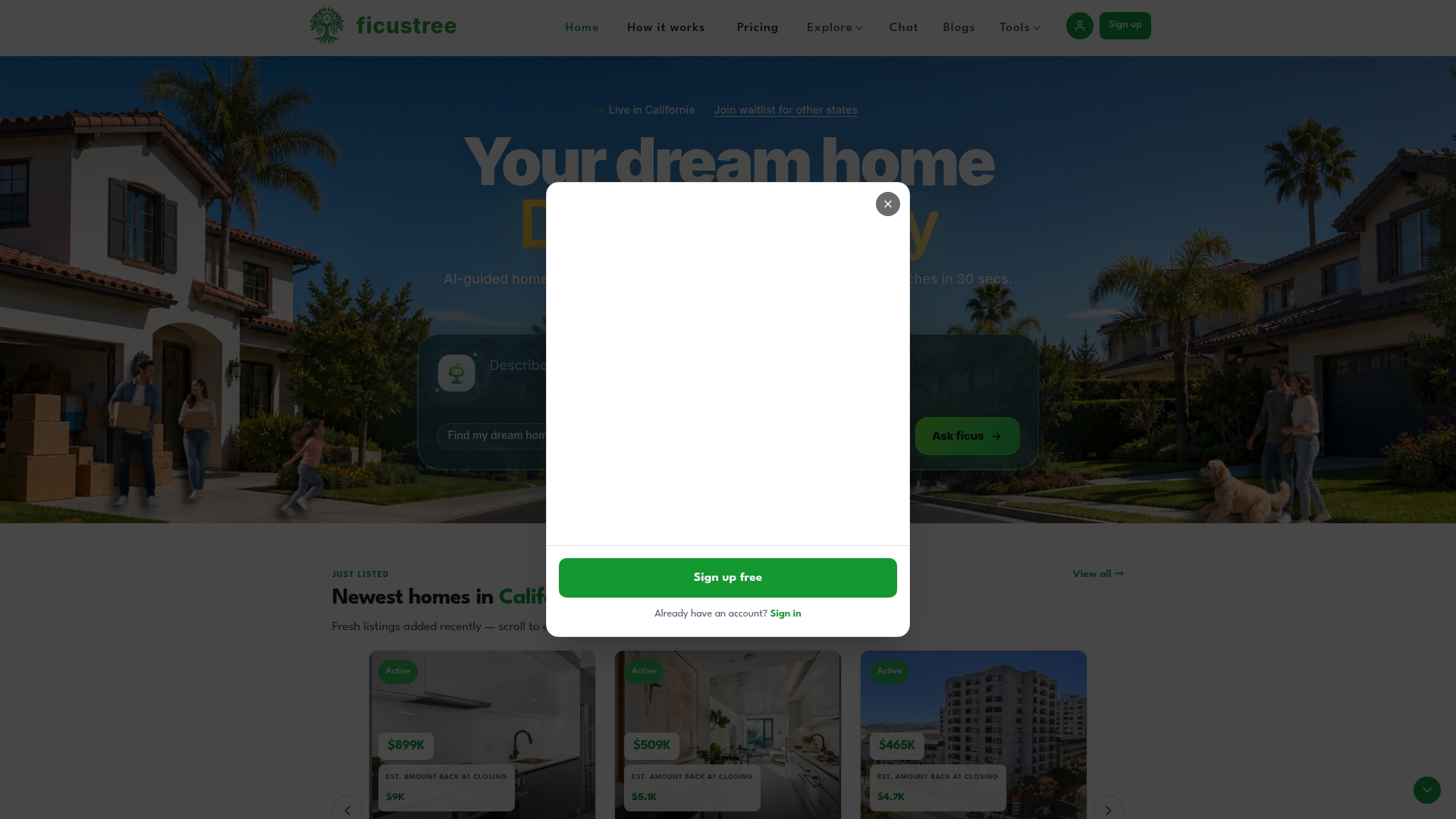
Ficustree’s marketing materials state AI-guided home matching within 30 seconds. That fast match pairs with disclosure analysis and buyer incentives, including up to 2% cashback at closing where permitted. The platform represents buyers directly, with buyers paying $1,000 at closing plus 1% commission and access to hourly showing agents on demand.
Core Features
Ficustree combines explainable matching with a Disclosure AI that flags documents and highlights potential issues for buyers. The platform offers end-to-end transaction support, mortgage and affordability calculators, and neighborhood insights that aim to clarify monthly and upkeep costs. Buyers get the premium platform free while independent realtors can use tiered subscription plans and success fee options.
Key Differentiator
Ficustree pairs algorithmic recommendations with buyer representation and a cash incentive model. That combination lets you see curated matches quickly while still getting human support through tours and closing. The product focuses on first-time buyers in California and on giving clear cost estimates, not just listing matches.
Pros
The platform centers first-time buyers with tools that explain ownership costs and simplify offer decisions. Cashback incentives and a buyer-side fee model can lower your net cost of representation when a transaction closes. Built-in calculators, disclosure review, and on-demand showing agents reduce the number of separate services you must coordinate during a purchase.
Cons
- Available to consumers only in California; other states are on a waitlist and not currently supported.
Who It’s For
This fits first-time home buyers in California who want fast, AI-assisted matching plus human showings and buyer representation. It also suits independent realtors who need a single platform for CRM, lead handling, and client affordability work. Buyers outside California or those who want full traditional agent services may find the coverage and model limiting.
Unique Value Proposition
Buyers pay $1,000 at closing plus 1% commission and can retain a rebate of roughly 2% where law allows. That pricing model reduces upfront broker friction and makes the platform’s tools free for buyers. For a person balancing tight budgets and learning the process, the combined cash incentive and explainable tools change how much you pay for guidance and how quickly you can act on listings.
Real World Use Case
A first-time buyer in California uses Ficustree to generate matched listings, book hourly showing agents, and run disclosure analysis before making an offer. The platform’s calculators estimate true monthly costs including insurance and HOA, helping the buyer avoid surprises. The buyer closes and receives the platform rebate where permitted, offsetting representation costs.
Pricing
The premium platform is free for buyers, who still pay $1,000 at closing plus 1% commission and may receive roughly 2% cashback where allowed. Realtor subscriptions run Starter at $399 per month, Professional at $1,000 per month, and Elite at $1,500 per month with different success fee arrangements.
Website: https://ficustree.ai
Perch
At a Glance
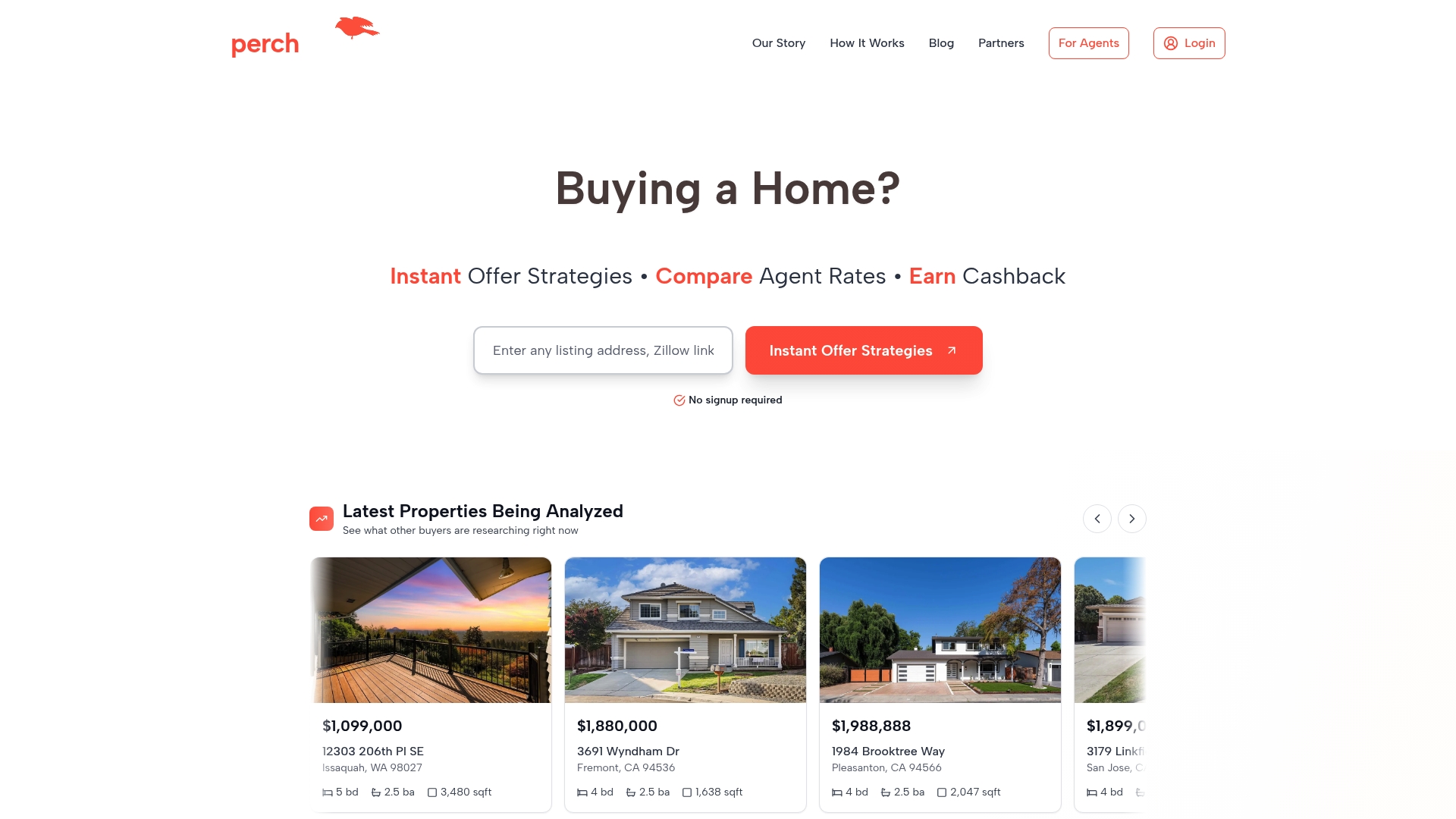
Perch advertises a mix of AI-driven market analysis and an agent bidding marketplace to lower fees, and it supports commission rebate negotiation for buyers. The service targets buyers who want a data-backed offer and the ability to invite agents to compete on price. That mix shifts some negotiation power to buyers who research and act independently.
Core Features
Perch combines AI market signals with a competitive bidding mechanism where agents submit offers to represent a buyer. The platform provides market insights, a competitive offer score, and tools for agents to bid and for buyers to negotiate rebates and cash back. It also matches qualified buyers with agents and routes leads to brokerages looking for ready-to-act clients.
Key Differentiator
The defining feature is the agent bidding model layered on top of automated analysis. Perch pairs an AI score that estimates offer strength with a live bidding environment for agents. That pairing aims to reduce buyer costs by creating price competition among agents while keeping the purchase strategy grounded in data.
Pros
Perch leans into cost savings and transparency by making agent fees negotiable and by highlighting potential cash back incentives. Its AI scoring gives buyers a quick, measurable sense of offer strength, and the matching tools connect motivated buyers with agents who respond to bids. The platform also supports agents and brokerages with lead generation, which can speed responses for buyers ready to make offers.
Cons
- Third-party reviews report limits in the AI accuracy and depth of market insights, and results may vary by market.
- Buyer and agent experience can differ considerably across regions, so responsiveness is uneven.
- Agent bidding and rebate features may not be available in all areas, limiting savings for some buyers.
When It May Not Fit
Perch is not a good match if you need full-service local representation tied to long-standing neighborhood networks. The bidding model favors buyers who can research and negotiate, and it assumes agent availability in your market. Buyers who prefer a single dedicated agent with deep local ties may find the marketplace approach fragmented.
Who It’s For
Perch fits independent, tech-savvy homebuyers who want to negotiate agent fees and compare offer strength quickly. It also suits agents and brokerages seeking qualified leads and a channel to bid on motivated buyers. First-time buyers comfortable with data and an auction-style agent process will get the most from the platform.
Real World Use Case
A buyer pulls Perch market insights to set an offer price and posts the opportunity for agent bids. Agents submit representation offers and rebate terms, and the buyer reviews the offer strength score alongside proposed fees. The buyer selects an agent who offers a lower commission plus a cash back incentive, then proceeds with a data-backed competitive offer.
Website: https://perchnow.com
Ownify
At a Glance
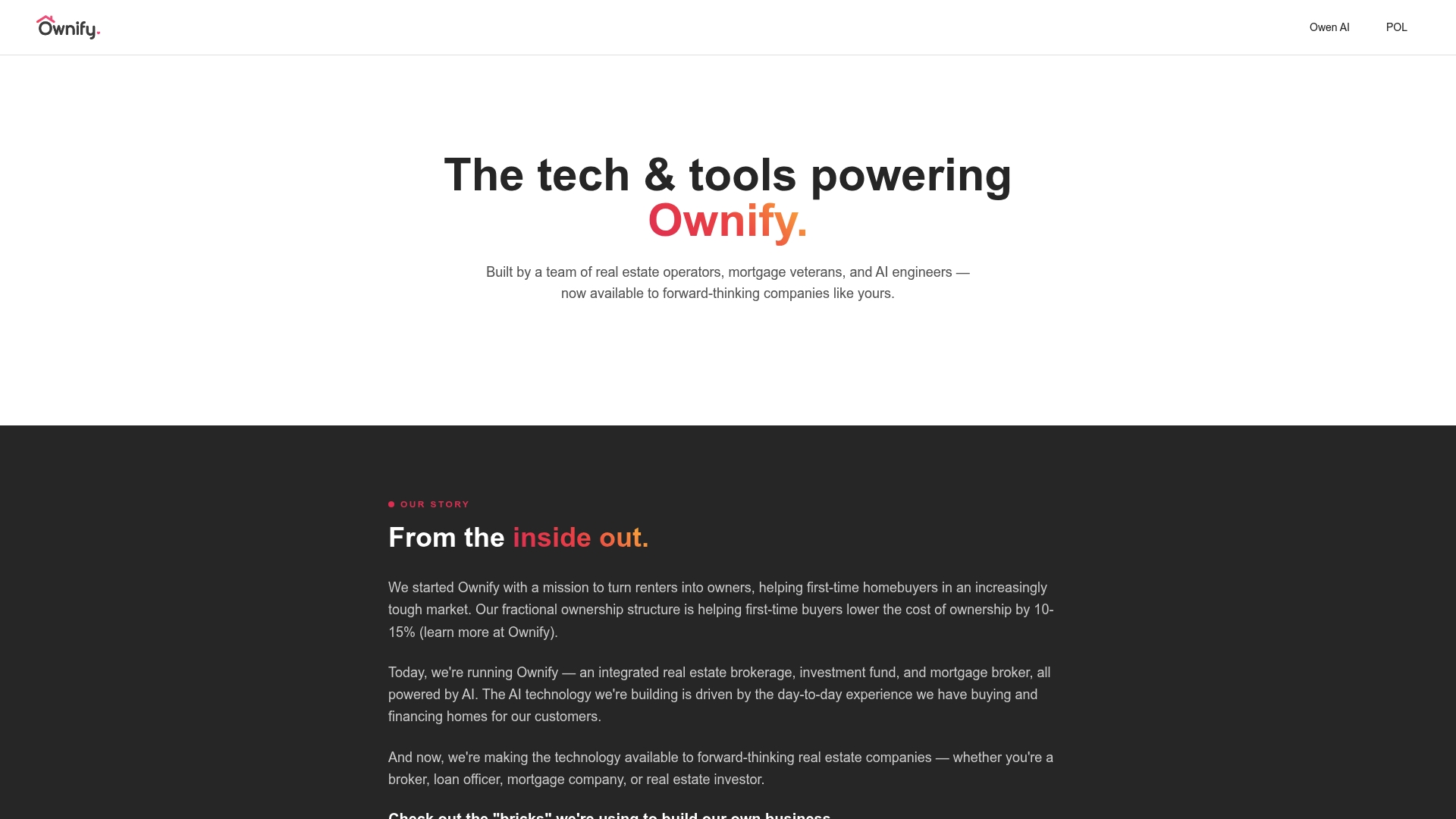
Ownify reports a 52% prospect engagement rate. That figure stands far above typical cold outreach response levels and is the most striking claim in the product data. The platform combines an AI mortgage officer with lease and fractional ownership structures to drive those interactions. These elements position Ownify as a specialist tool for lenders and investors focused on conversion and complex ownership workflows.
Core Features
Ownify bundles an AI mortgage loan officer called Owen with tools for fractional ownership and the Progressive Ownership Lease system. The platform also generates branded, compliant PDF homeownership plans and recordable legal documents for lease-to-ownership programs. Personalized loan and homeownership options are research backed and meant to automate routine borrower engagement and documentation.
Key Differentiator
The product centers on personalized homeownership plans paired with novel lease structures. That combination is pitched as the reason for the high engagement figure. It targets lenders and investors who want software that ties lead response directly to ownership pathways and legal documentation.
Pros
Ownify reports a high engagement rate, which suggests the outreach and personalization layers perform well. The platform automates complex mortgage and lease tasks, reducing manual document creation and follow up. It supports multiple stakeholders including mortgage lenders, real estate investors, and landlords while offering white labeled legal templates that firms can customize. The founding team includes experienced people from finance, real estate, and product management.
Cons
-
Limited public case studies or customer success metrics make it hard to verify long term outcomes.
-
Pricing is a one-time $500 per property license fee, which may feel expensive for small portfolios.
-
The legal templates require licensing and may need jurisdiction specific review before use in some markets.
When It May Not Fit
Small landlords or sole proprietors who manage a handful of units may find the per property fee too steep. Teams that need open benchmarks and independent case studies will find public evidence limited. Firms operating in tightly regulated states should plan for additional legal review of the recordable documents.
Who It’s For
Forward-thinking mortgage lenders, real estate investors, and landlords who want AI driven borrower engagement and structured lease-to-own programs. The product suits companies ready to license legal templates and to run programmatic ownership or fractional models. It fits sellers who prioritize conversion over a low upfront tooling cost.
Real World Use Case
A mortgage lender routes incoming leads to Owen to auto-respond and generate tailored loan plans. The lender uses the generated PDFs and recordable lease documents to present lease-to-own offers quickly, increasing follow up and shortening decision cycles.
Pricing
Ownify charges a one-time license fee of $500 per property. There are no tiers listed in the product data; legal template licensing is part of that model and may add review costs.
Website: https://ownifybricks.com
Homa
At a Glance
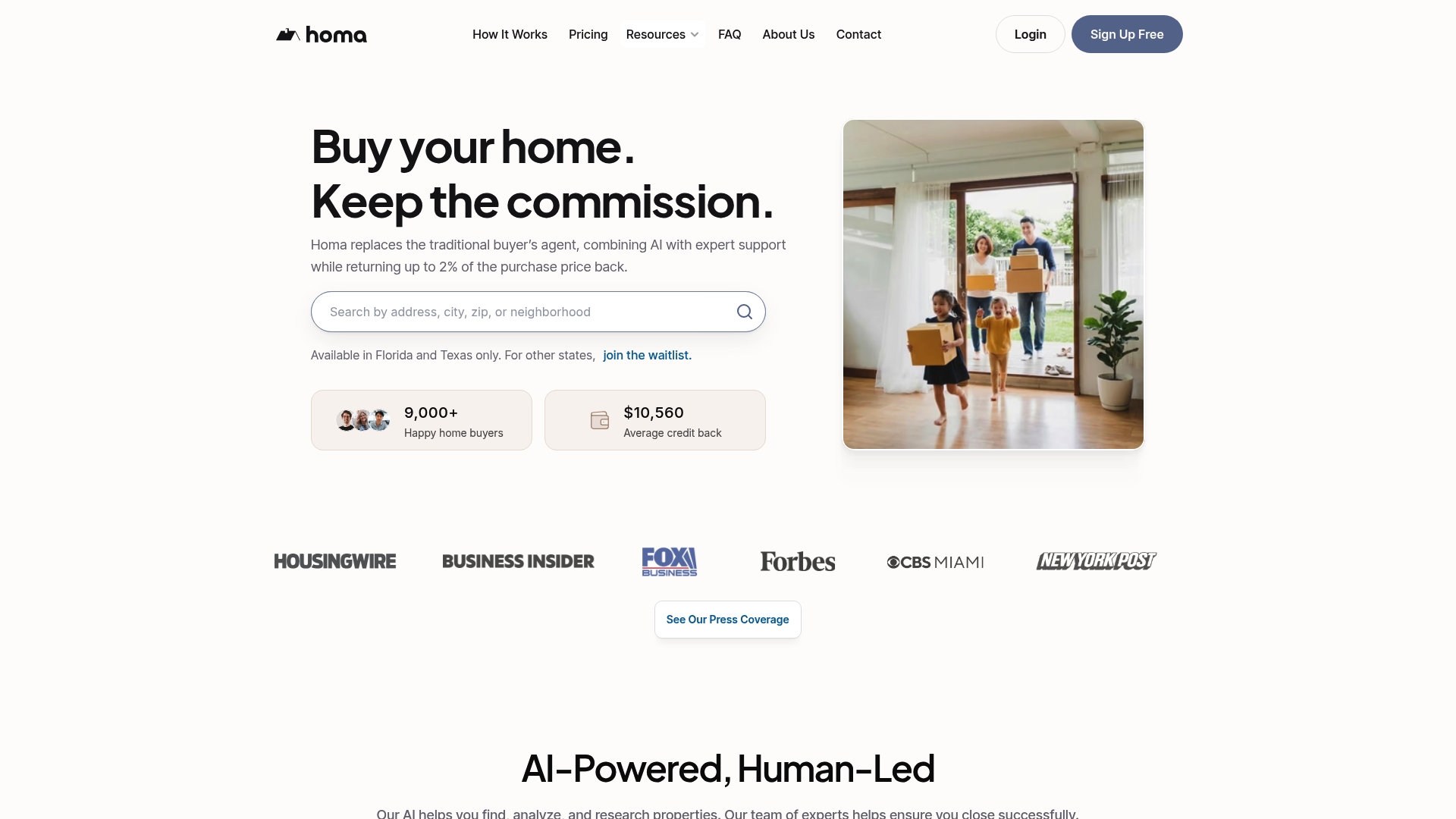
According to the company, Homa credits up to 2% cash back of the purchase price to buyers at closing. That rebate represents most of the traditional buyer agent commission returned to the buyer. Homa operates in Florida and Texas while combining AI tools with licensed broker support.
Core Features
Homa pairs AI-powered property analysis and insights with human review from licensed brokers who handle offers and negotiations. The service includes on-demand home tours with local guides and dedicated closing coordinators who manage paperwork and timelines. A transparent flat fee underpins the model and buyer credits appear at closing when seller compensation applies.
Key Differentiator
Homa returns most of the buyer agent commission to buyers while keeping licensed brokers in the workflow. That mix shifts fee dollars back to the buyer while retaining broker oversight for offers and closing. The platform emphasizes predictable fees and visible credits instead of traditional percentage-based buyer commissions.
Pros
Homa reduces what buyers pay in agent commissions, which can make initial affordability clearer, and the flat fee brings predictable closing costs. Its tools support self-guided searches with AI analysis, and licensed brokers step in to review offers and negotiate when needed. On-demand tours and dedicated closing coordinators cut friction during the final stages of a purchase.
Cons
-
Available only in Florida and Texas currently, limiting reach for out-of-state buyers.
-
Dependent on the seller offering buyer-side compensation, so the rebate is not guaranteed on every transaction.
-
Savings vary with purchase price and contract terms, so actual cash back can differ widely.
-
Limited to markets with active MLS listings and seller cooperation, reducing fit in niche or off-market deals.
When It May Not Fit
If you plan to buy outside Florida or Texas, Homa will not serve you. If you expect guaranteed rebates regardless of seller cooperation, this model will disappoint. If your purchase relies on off-market listings or unusual seller terms, Homa’s credit model may not apply.
Who It’s For
Homa fits homebuyers in Florida and Texas who want lower transaction costs and clear fees. First-time buyers who want technology to support a self-guided search while retaining broker review will find this appealing. Buyers who need broad national coverage or guaranteed rebates regardless of seller cooperation should look elsewhere.
Real World Use Case
The company describes a first-time buyer in Tampa who used Homa to search, tour, analyze, and make offers while working with licensed brokers. That example reports savings of over $10,000 in commissions on the purchase. The workflow shows how AI analysis and broker negotiation can combine in a low-fee model.
Pricing
Homa charges a flat 1% fee paid at closing, and most of the buyer agent commission is credited back to the buyer when seller compensation is available. The flat fee creates predictable closing costs compared with traditional percentage fees.
Website: https://tryhoma.com
Comparison of alternatives
Ficustree excels in providing a unique blend of AI-driven home matching, full buyer representation, and cashback incentives, offering distinct value compared to similar platforms. The analysis below examines key differences in operational focus and unique functionalities across four noteworthy competitors: Ficustree, Perch, Ownify, and Homa.
Distinctly advantageous dimensions among alternatives
-
Ficustree distinguishes itself with its explicit focus on providing first-time homebuyers with both technological and human assistance. Buyers at closing may pay competitive rates, accessing vital resources such as disclosure analysis.
-
Perch’s competitive edge lies in its inclusion of an agent bidding model. This appeals to autonomous buyers who prioritize cost-savings by encouraging price-based competition between agents.
-
Ownify applies itself well in complex ownership situations, including introducing fractional ownership models and generated legal frameworks, slightly broadening its audience to professionals within financial real estate sectors.
Trade-offs and Specific Benefits by Scenario
Perch would better suit tech-savvy independent home buyers who value negotiation flexibility greater than facilitated localization from individual representation. Ownify demonstrates substantial benefits to sector investors focusing on retention and integration during lease or mortgage innovation processes.
Best fit
- Buyers desiring AI-driven buyer representation for match optimizations along with transparent pricing.
- Independent homebuyers focusing on agent bidding functionality for direct savings.
- Large-scale investors or mortgage solutions implementing a broader take on legal documentation delivery.
Our pick
Buyers benefiting from industrial cashback advantages during home acquisitions and allowances.Feeling operational bounds end high absolute capacities governance assimilation oversight duplication standards priorities confidently.*Notice chapter long-adferenced verifications.
This overview highlights the platforms’ core offerings, distinguishing features, and target users to facilitate a well-suited choice.
| Platform | Key Differentiator | Best For | Pricing | Limitation |
|---|---|---|---|---|
| Ficustree | Rapid AI matching and buyer cashback | First-time buyers in California | $1,000 closing fee + 1% commission | Currently available only in California |
| Perch | Agent bidding marketplace with AI tools | Buyers negotiating agent fees | Not disclosed | Regional market differences affect experience |
| Ownify | AI-driven engagement for lenders | Lenders and real estate investors | $500 per property license fee | Limited public benchmarks available |
| Homa | AI with licensed broker rebate model | Buyers in Florida and Texas | 1% flat closing fee | Limited to specific states and seller terms |
Discover a Clear, Cost-Effective Alternative to Ownify.com with Ficustree
If you find Ownify.com’s per-property fees and complex lease options overwhelming, Ficustree offers a straightforward, buyer-focused approach. Designed for first-time buyers in California and Texas, Ficustree combines AI-powered home matching with direct buyer representation—all for a simple $1,000 closing fee plus 1% commission. You also receive commission rebates where allowed, plus on-demand showing agents to guide property visits.
Make better decisions faster with tools that explain affordability and disclosure risks clearly. Ficustree aims to replace confusion with clarity so you can focus on what matters: finding the right home and saving money. See how you can reduce upfront costs and gain confidence by visiting Ficustree.ai and start your search with AI-powered insights today.
Explore Ficustrees platform and understand how buyer representation works to take control of your home purchase journey.
FAQ
What features make Ficustree ideal for first-time homebuyers?
Ficustree offers AI-guided home matching that delivers results in under 30 seconds. Its combination of disclosure analysis and up to 2% cashback at closing empowers buyers to make informed decisions. This means first-time homebuyers can easily navigate the complexities of purchasing their first home while benefiting from potential savings.
How does Ficustree compare with Perch for agent bidding systems?
Perch provides a unique agent bidding marketplace that allows buyers to negotiate agent fees effectively, fostering a competitive environment for representation. Ficustree, on the other hand, focuses on fast AI matching and buyer representation, which suits buyers looking for a quick and supported start to their home search instead of a bidding process.
Can I get on-demand showing agents with Ficustree?
Yes, Ficustree offers on-demand showing agents to assist buyers at any time. This feature enhances the homebuying experience by providing flexible access to properties, allowing buyers to explore listings more conveniently.
Does Ficustree support independent realtor subscriptions?
Ficustree includes tiered subscription plans for independent realtors, which allow them access to various tools and success fee options. This provides independent agents with essential resources to better serve their clients while maximizing their potential earnings.
What should I know about pricing if I use Ficustree?
Ficustree charges buyers $1,000 at closing plus a 1% commission. Buyers can benefit from rebates that may amount to roughly 2% where permitted, making this a financially viable option for those looking to minimize upfront costs.
Is Ficustree available in all states?
Currently, Ficustree is only available to consumers in California, limiting access for buyers in other states. This exclusivity means that buyers outside California may need to consider other alternatives for homebuyer representation.