
Sustainable home features are the single most consequential category of specifications California buyers evaluate today, directly affecting energy costs, code compliance, and long-term resale value. The industry term for this category is “high-performance home design,” and it covers everything from photovoltaic solar systems to low-VOC interior finishes. California’s Title 24 building code, Berkeley’s Building Emissions Saving Ordinance (BESO), and the state’s aggressive electrification push have made green home features less optional and more mandatory with each passing year. If you are buying in California right now, understanding these features before you make an offer is the difference between a smooth transaction and a costly surprise in escrow.
1. Photovoltaic solar systems sized to Title 24
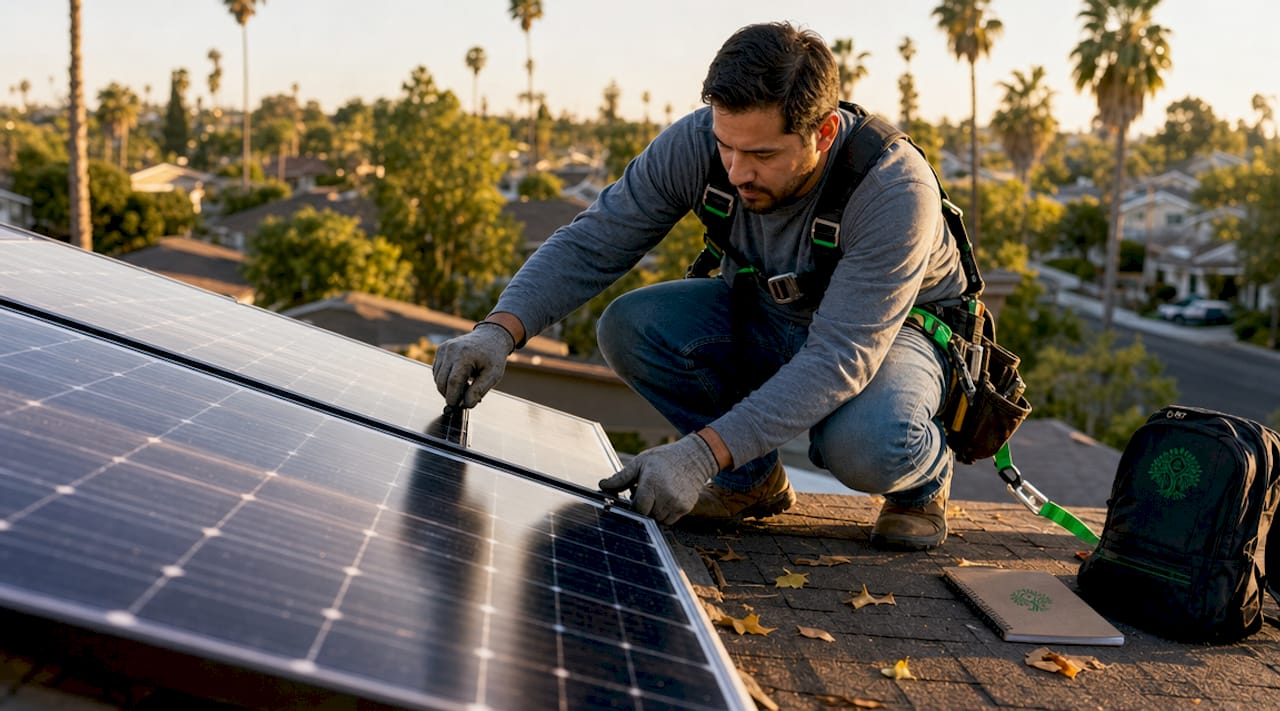
Solar power is the most visible and financially significant sustainable home feature for California buyers. The 2025 Title 24 code requires photovoltaic systems sized to offset annual electricity use on most new single-family homes, with systems typically ranging from 2.5 to 5 kW depending on home size and climate zone. That sizing requirement means a home in San Diego’s climate zone 7 will carry a different PV spec than one in Sacramento’s zone 12.
For buyers, the practical implication is straightforward: a compliant new home already includes solar, and that system should be sized correctly per the code. When evaluating resale homes, verify whether the existing system meets current output requirements or whether an upgrade will fall to you after closing. Owned systems add more value than leased ones, and transferring a solar lease can complicate financing.
2. Heat pump space and water heating
Heat pumps are now the baseline HVAC specification for new California construction, replacing gas furnaces as the default. Builder upgrade costs range from $2,500 for a standard heat pump package to $14,000 for a premium variable-speed system with zoning and heat recovery ventilation. The gap between those tiers is significant, and what you get at the builder base level is not what most buyers assume.
A mid-tier upgrade typically adds a two-stage heat pump and a smart thermostat. A premium package adds variable-speed operation, HVAC zoning, and an HRV ventilation system. For buyers purchasing new construction, negotiating these upgrades at contract signing is far cheaper than retrofitting after move-in. Installing a heat pump water heater during construction saves $1,200 to $2,500 compared to a post-close retrofit, with additional incentives available through programs like the federal Inflation Reduction Act tax credits.
3. Energy-efficient windows and building envelope
Windows are a primary driver of heating and cooling load in California homes, and Title 24 specifies maximum U-factor and Solar Heat Gain Coefficient (SHGC) values by climate zone. Low U-factor windows reduce heat transfer; low SHGC values limit solar heat gain in warmer inland zones. A home in Palm Springs needs a very different window spec than one in San Francisco.
Beyond windows, Quality Insulation Installation (QII) requires HERS-rater verification of properly installed insulation in walls and ceilings. QII certification means a third-party inspector confirmed the insulation was installed without gaps or compression, which directly improves thermal performance. When reviewing a new construction home, ask specifically whether QII was completed and documented.
4. Smart thermostats and HVAC controls
Smart thermostats are a standard feature in California’s high-performance home category, not a luxury upgrade. Devices like the ecobee and Honeywell T10 adjust heating and cooling based on occupancy patterns and user preferences, reducing energy consumption without sacrificing comfort. In California’s variable climate zones, that adaptive control matters more than in states with more uniform weather.
HVAC zoning takes this further by allowing different temperature settings in different rooms or floors. A two-story home in the Central Valley, where summer temperatures regularly exceed 100°F, benefits enormously from zoning that keeps the upstairs cooler without overcooling the ground floor. These controls also integrate with utility time-of-use rate programs, automatically shifting energy consumption away from peak pricing windows.
Pro Tip: Ask your builder or listing agent for the HERS (Home Energy Rating System) score on any home you are seriously considering. A lower HERS score means better energy performance. New California homes typically score between 0 and 50; anything below 30 represents genuinely high performance.
5. Indoor air quality systems and low-VOC materials
Green homes prioritize indoor air quality through low-VOC materials, heat-recovery ventilation, and air filtration systems, reducing pollutants and health risks that align directly with buyer wellness priorities. This is one of the most underappreciated categories in eco-friendly homes California buyers evaluate, because the effects are invisible until they are not.
Low-VOC paints, adhesives, and flooring materials reduce off-gassing of volatile organic compounds, which are linked to respiratory irritation and long-term health effects. MERV 13 filters in the HVAC system capture fine particulate matter, including wildfire smoke, which is a genuine seasonal concern across most of California. Energy Recovery Ventilators (ERVs) bring in fresh outside air while recovering the energy from exhaust air, maintaining air quality without spiking the utility bill.
6. Water-saving fixtures and drought-tolerant landscaping
Water efficiency is a defining characteristic of California eco homes, given the state’s persistent drought conditions. Low-flow faucets, drought-tolerant landscaping, and greywater recycling are standard features in well-designed California properties, reducing both water bills and environmental impact. A home with WaterSense-labeled fixtures and a native plant landscape can cut outdoor water use by 50% or more compared to a conventional lawn setup.
Greywater systems, which redirect water from sinks and showers to irrigation, are legal in California with proper permitting and are increasingly common in new construction. Dual-flush toilets reduce indoor water consumption without any change in daily habits. For buyers in Southern California especially, these features carry real financial weight as tiered water pricing makes high consumption increasingly expensive.
7. Green certifications as buyer verification tools
LEED (Leadership in Energy and Environmental Design) and Passive House certifications give buyers a third-party verified signal that a home meets specific sustainability standards. LEED certification covers energy, water, materials, and indoor air quality across a point-based system. Passive House focuses specifically on airtightness, insulation, and mechanical ventilation to achieve ultra-low energy use.
Neither certification is required by California law, but both add measurable resale value and provide documentation that simplifies future transactions. High-performing homes cost 5 to 10% more upfront but deliver lower total cost of ownership through reduced monthly energy expenses. That premium shrinks further when you factor in available federal tax credits and California utility rebates.
8. How California’s 2026 building codes shape your purchase
The 2025 Title 24 code, effective January 1, 2026, sets the floor for what new California homes must include. PV systems, heat pump heating, and QII-verified insulation are all baseline requirements, not optional upgrades. For buyers of new construction, this means the home you are buying already meets these standards. For resale buyers, the picture is more complicated.
Berkeley’s BESO policy is the most aggressive local mandate in the country. Berkeley requires homes sold to meet a minimum of 6 credits through emissions-reducing upgrades, including heat pump water heaters, solar panels, and wall insulation. If a seller has not completed those upgrades, the buyer and seller can agree to deposit funds in escrow for deferred compliance, with the buyer then having 2 years to complete the required work. This policy directly affects your negotiating position and your post-close budget.
Verifying BESO compliance status before making an offer in Berkeley is not optional. It is the kind of detail that first-time buyers in California frequently overlook, and it can add tens of thousands of dollars in post-close obligations if missed. Other cities are watching Berkeley’s model closely, and similar ordinances are likely to spread across the Bay Area.
Pro Tip: When buying in any California city, request the property’s energy disclosure documents and any local green compliance records before your inspection period ends. This gives you time to negotiate credits or repairs rather than discovering obligations after closing.
9. Sustainable materials and construction practices
The materials inside a California home matter as much as the mechanical systems. Recycled content flooring, locally sourced lumber, and formaldehyde-free cabinetry reduce both environmental impact and indoor chemical exposure. Builders using these materials often pursue LEED points for materials and resources, which creates a documented record you can reference during resale.
Here is a quick comparison of common sustainable material choices:
| Feature | Standard Option | Sustainable Option |
|---|---|---|
| Flooring | Vinyl or carpet | Bamboo, cork, or recycled-content tile |
| Cabinetry | Particleboard with formaldehyde binders | Formaldehyde-free plywood or solid wood |
| Insulation | Fiberglass batts | Recycled denim or cellulose |
| Paint | Standard latex | Zero-VOC or low-VOC formulations |
| Landscaping | Conventional turf | Native plants and drip irrigation |
Choosing sustainable materials during new construction is significantly cheaper than replacing them later. If you are buying new construction and the builder offers a materials upgrade package, evaluate it against the cost of retrofitting after move-in. The construction financing landscape for sustainable new builds in California has also expanded, with lenders increasingly offering products that account for energy savings in qualifying calculations.
Key takeaways
California buyers who prioritize solar, heat pumps, smart controls, and water efficiency from the start pay less over time and face fewer compliance surprises at resale.
| Point | Details |
|---|---|
| Solar is now baseline | Title 24 requires PV systems on most new California homes; verify sizing and ownership status on resale properties. |
| Heat pumps replaced gas | New construction uses heat pump heating as standard; negotiate upgrades at contract signing to save $1,200 or more. |
| Berkeley BESO affects escrow | Sellers must meet 6 credits or fund escrow for deferred compliance; verify status before making an offer. |
| Certifications add resale value | LEED and Passive House certifications document performance and simplify future transactions. |
| Materials and water matter | Low-VOC finishes and WaterSense fixtures reduce health risks and ongoing utility costs. |
Why I tell buyers to ask about HVAC before anything else
When buyers ask me what to prioritize when evaluating a California home, most expect me to say solar. I say HVAC. Here is why.
Solar is visible, marketable, and increasingly standardized by code. The HVAC system is where the real variation lives. I have seen new construction homes in San Diego where the builder base package included a single-stage heat pump with no zoning and a basic thermostat, while the premium package in the same development included variable-speed operation, three zones, an ERV, and a MERV 13 filtration setup. The difference in monthly comfort and utility cost between those two homes is substantial, and most buyers never ask the question.
The shift to heat pump heating as the California baseline has cascaded through builder specs and rebate programs in ways that make HVAC questions more critical than ever. A buyer who understands the difference between a two-stage and a variable-speed heat pump is in a much stronger negotiating position than one who just checks the “has heat pump” box.
I also push buyers to take indoor air quality seriously as a sustainability issue, not just an energy one. California’s wildfire seasons have made MERV 13 filtration and ERV systems genuinely important for health, not just efficiency metrics. A home with a premium ventilation setup is meaningfully different from one without it, and that difference does not show up in a standard listing description.
Finally, on timing: if you are buying new construction, the window to negotiate sustainable upgrades is at contract signing, not after framing. Once the walls are up, the cost of adding insulation, upgrading HVAC, or switching to a heat pump water heater increases dramatically. The construction phase savings on electrification upgrades alone can justify a careful review of every builder option sheet before you sign.
— Anand
Find your next sustainable home with Ficustree
Searching for eco-friendly homes in California means sorting through listings, decoding energy disclosures, and tracking local code requirements across dozens of cities. Ficustree’s AI-powered platform does that work for you.

With Ficustree, you can search California homes filtered by energy-efficient features, get guidance on Title 24 compliance status, and access hyper-personalized recommendations that match your sustainability priorities and budget. The platform covers all 467 California cities, so whether you are buying in Berkeley with its BESO requirements or in San Diego with its heat pump mandates, you get relevant, localized insight at every step. Learn how Ficustree works and start your search today.
FAQ
What sustainable features does California’s Title 24 require in 2026?
The 2025 Title 24 code, effective January 1, 2026, requires photovoltaic solar systems, heat pump heating, and HERS-verified Quality Insulation Installation on most new single-family homes. PV systems typically range from 2.5 to 5 kW depending on home size and climate zone.
What is Berkeley’s BESO and how does it affect home buyers?
Berkeley’s Building Emissions Saving Ordinance requires homes sold to earn a minimum of 6 credits through emissions-reducing upgrades like heat pump water heaters and solar panels. If upgrades are not complete at sale, funds are held in escrow and the buyer has 2 years to comply.
Do sustainable home features increase resale value in California?
High-performing homes cost 5 to 10% more upfront but deliver lower total cost of ownership through reduced energy bills, and LEED or Passive House certifications provide documented performance records that support stronger resale pricing.
When is the best time to add sustainable upgrades to a new construction home?
The best time is at contract signing, before construction begins. Installing a heat pump water heater during construction saves $1,200 to $2,500 compared to a post-close retrofit, and HVAC upgrades are significantly cheaper before walls are framed.
What smart home technologies qualify as sustainable features in California?
Smart thermostats like the ecobee and Honeywell T10, HVAC zoning systems, ERV ventilation, and MERV 13 air filtration all qualify as sustainable living solutions that reduce energy use and improve indoor air quality in California homes.