Why Buyers Love Los Angeles, California
A sprawling metropolis of 3.9 million people blending urban walkability, entertainment, and diverse neighborhoods across Southern California.
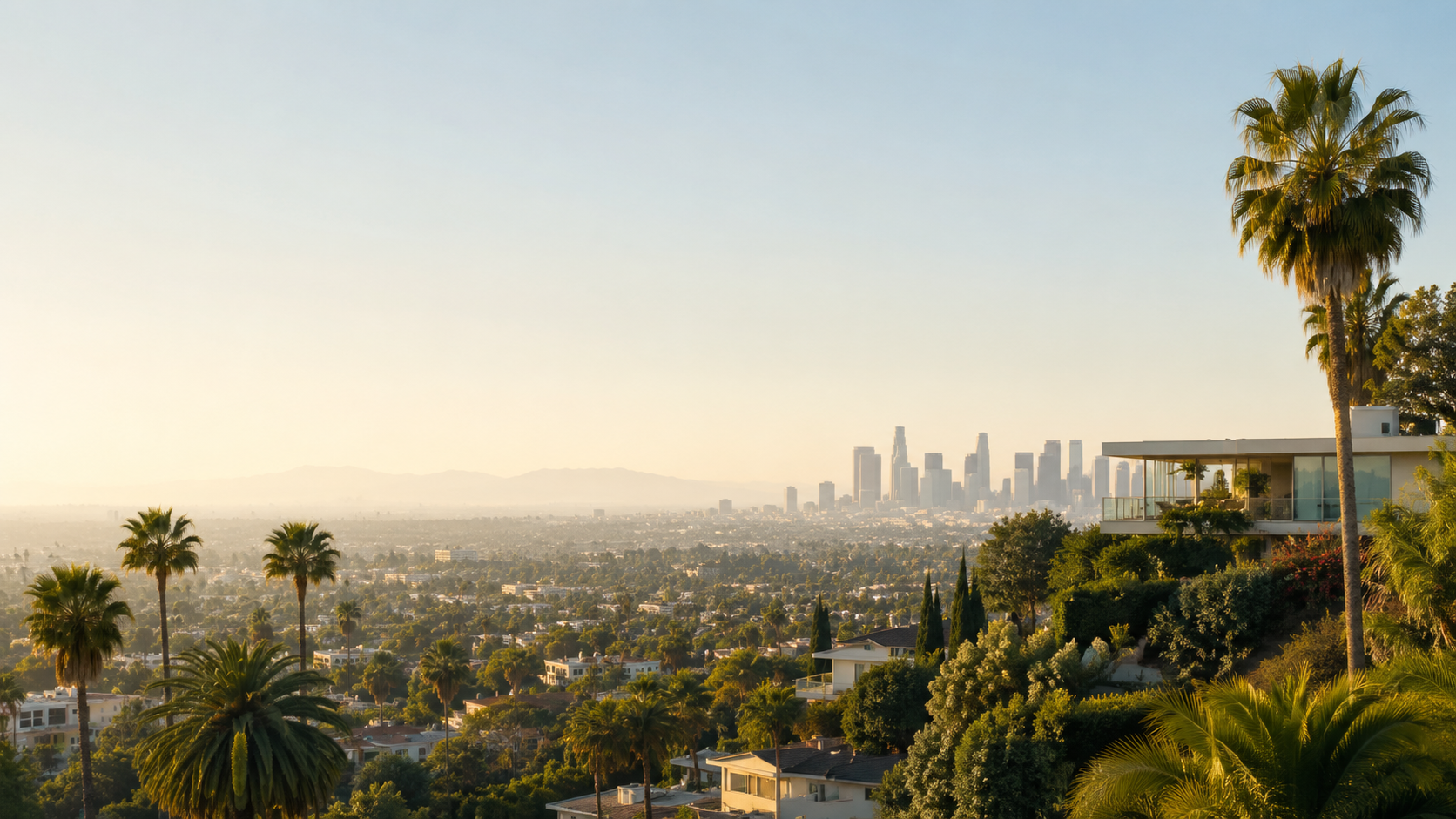
Living and buying in Los Angeles, CA
Los Angeles is home to 3.9 million residents and offers one of California's most dynamic real estate markets. With a median home value of $822,600, the city attracts first-time buyers, families, investors, and remote workers seeking a vibrant urban lifestyle. Los Angeles combines world-class walkability (97 Walk Score), unmatched public transit (perfect 100 Transit Score), and access to beaches, mountains, and cultural landmarks, making it a compelling choice for those seeking both opportunity and quality of life.
Who should buy in Los Angeles
Los Angeles appeals to diverse buyer types seeking walkability, urban amenities, career opportunities, and lifestyle flexibility.
Diverse neighborhoods with entry-level condos under $600k, strong rental markets for house-hacking strategies, and established transit corridors reduce car dependency.
Los Angeles offers excellent school systems, abundant parks like Griffith Park and Pershing Square, child care options throughout downtown, and family-friendly neighborhoods like Silver Lake and Eagle Rock.
Strong rental yields (2.6% to 3.2%), consistent population growth, and diverse property types from multifamily to single-family homes support long-term appreciation.
Perfect transit access, abundant coworking spaces, reliable broadband, and neighborhood coffee shops like G&B and Blue Bottle Coffee create ideal work-from-home environments.
Year-round mild climate, premium healthcare via Kaiser Permanente and local clinics, vibrant cultural scene, and walkable urban neighborhoods provide engagement without car dependence.
Who should think twice
Los Angeles presents real tradeoffs: high cost of living, congestion outside transit zones, and crime disparities across neighborhoods require careful due diligence.
Best neighborhoods in Los Angeles
Los Angeles encompasses over 100 distinct neighborhoods, each with unique character, price points, and walkability scores. Understanding microneighborhoods is essential for finding the right fit.
Los Angeles neighborhoods reward selective shopping: walkable, safe enclaves like Los Feliz and Silver Lake command premium prices but offer strong schools and established communities, while up-and-coming areas like Koreatown and parts of Downtown provide better entry points for investors and first-time buyers willing to accept some urban grit. Proximity to metro lines, parks, and entertainment varies dramatically; a 5-minute walk in one neighborhood becomes a 20-minute car ride in another. Renters often discover neighborhoods' true character before buying, reducing the risk of overpaying for a location that doesn't fit your lifestyle.
All neighborhoods in Los Angeles
Browse detailed buyer guides for every Los Angeles neighborhood we cover, including local market data, walkability, schools, and lifestyle.
- Adams-Normandie
- Alvarado Terrace Historic District
- Angeleno Heights
- Arleta
- Arlington Heights
- Arts District
- Beverly Crest
- Beverly Glen
- Bicycle District
- Boyle Heights
- Bunker Hill
- Canoga Park
- Castellammare
- Chinatown
- Civic Center
- Country Club Park
- Cypress Park
- Dayton Avenue
- Devonshire Country Estates
- Devonshire Highlands
- Dogtown
- Downtown
- East Hollywood
- Echo Park
- El Merrie Del
- Elysian Valley
- Encino
- Exposition Park
- Fashion District
- Financial District
- Florence
- Gallery Row
- Hancock Park
- Harvard Heights
- Historic Core
- Historic Filipinotown
- Historic South-Central
- Hollywood
- Jefferson
- Jefferson Park
- Jewelry District
- Koreatown
- Lake Balboa
- Lake View Terrace
- Larchmont
- Lincoln Heights
- Little Armenia
- Little Bangladesh
- Little Tokyo
- Los Feliz
- Mission Hills
- Mount Washington
- New Chinatown
- North Hills
- North Hills East
- Northridge
- Panorama City
- Pico-Union
- Pueblo de Los Ángeles
- Raymer
- Reseda
- Reseda Ranch
- Saint James Park
- Sherman Oaks
- Silver Lake
- Silver Lake Heights
- Skid Row
- South Park
- Sunset Junction
- Tarzana
- Thai Town
- Toy District
- University Park
- Van Nuys
- Victoria Park
- Virgil Village
- Westlake
- Wilton Historic District
- Windsor Square
- Winnetka
Los Angeles home prices and market data
Los Angeles real estate remains strong despite affordability pressures. Median home prices sit at $822,600 with stable inventory and modest annual appreciation.
vs CA Median: 8% above California median | Inventory: 4.2 months
Real estate trends and forecast in Los Angeles
Los Angeles experienced 2.1% year-over-year appreciation with stable demand from tech workers, international buyers, and investors. Rental yields remain attractive at 2.6% to 3.2%, though price growth has moderated from pandemic peaks.
GROWTH DRIVERS
- Continued tech industry expansion and remote work flexibility
- International investment and foreign buyer demand
- Population migration from higher-cost coastal regions
- Urban revitalization and neighborhood gentrification
RISK FACTORS
- High purchase prices limit buyer pool and can cap appreciation
- Rising crime in pockets may suppress demand in affected neighborhoods
- Potential recession could dampen demand and rental yields
Los Angeles real estate remains attractive for long-term holders, particularly in walkable neighborhoods like Silver Lake, Los Feliz, and Downtown where appreciation fundamentals are strongest. Investors find the best opportunities in Koreatown and Eagle Rock, where entry prices under $850k paired with strong rental demand yield solid returns. However, price appreciation may slow as affordability pressures mount; buyers should focus on neighborhood quality, school ratings, and rental demand rather than expecting 5%+ annual price growth. Downtown Los Angeles and emerging areas near metro stations offer the clearest upside for patient investors.
True cost of owning a home in Los Angeles
Owning a $500k home in Los Angeles runs approximately $4,100 to $4,600 monthly including mortgage, taxes, insurance, and utilities.
Mortgage, taxes, insurance, HOA, utilities, and maintenance add up fast. Use Ficustree’s True Cost of Ownership calculator to model the full monthly carrying cost for your specific price point, county, and loan terms before you commit.
For a quick anchor, a $500K home in Los Angeles typically runs around $4,059/month all-in. Income to qualify is roughly $162,360 per year with a 20% down payment of $100,000. Use the calculator above for your exact numbers.
Quality of life in Los Angeles
Los Angeles scores exceptionally high on walkability, transit, and lifestyle amenities, though traffic, affordability, and crime disparities temper the picture. The city delivers vibrant urban living balanced against real tradeoffs.
Climate: Mediterranean: warm dry summers (75-85F), mild winters (50-65F), over 280 days of sunshine annually, minimal rainfall May through September.
Schools in Los Angeles
Los Angeles Unified School District (LAUSD) serves 600,000+ students with highly variable school quality. Charter and magnet schools often outperform traditional public schools; private options abound for families seeking alternatives.
Top Schools: Harvard-Westlake School (private), Palisades Charter High School, Bravo Medical Magnet High School, Los Angeles Academy of Arts and Enterprise
Private Options: Harvard-Westlake, Archer School for Girls, Cate School, Crossroads School, The Center for Early Education
Is Los Angeles safe?
Los Angeles faces significant crime challenges with rates above US averages, though variation between neighborhoods is extreme. Downtown and some central areas struggle with property crime and homelessness; peripheral neighborhoods offer safer profiles.
Safest areas: Los Feliz, Silver Lake, Eagle Rock, Hancock Park, Brentwood
Trend: stable | Watch: Downtown and some central corridors experience elevated property crime and visible street issues; detailed neighborhood research and direct visits are essential before committing to a purchase.
Property taxes in Los Angeles
Proposition 19 (2020) allows transfer of Prop 13 benefits under limited circumstances; parents should consult a tax advisor before inheriting property.
Honest buyer reality check
The honest take: Los Angeles offers exceptional lifestyle and long-term wealth building, but carries real risks often underestimated by out-of-state buyers. High entry costs mean little room for error if the market softens or employment becomes uncertain. Crime and homelessness are real neighborhood concerns that vary dramatically; a thriving block can border trouble within a mile. Traffic outside transit zones rivals any US city; remote work flexibility matters hugely. Seismic activity, while infrequent, carries long-term risk that should drive home inspection rigor and earthquake insurance.
Hidden costs buyers miss: Condo buyers face surprise HOA increases; property managers commonly raise fees 5% to 8% annually. Parking requirements and HOA assessments for building repairs can add $300 to $1,000+ monthly. Mello-roos (Malibu Parkway, some new developments) add 0.1% to 0.4% to property taxes for 30 years. Water conservation fees, utility rate hikes, and earthquake insurance (often $600+ annually) catch many buyers off guard.
Natural risks: Seismic activity and earthquake damage potential, Wildfire risk in elevated or canyon areas, Flash flooding in some neighborhoods during rare heavy rain, Air quality degradation during wildfire season
Zoning watch: Zoning varies sharply; some neighborhoods allow duplex conversions and ADU (accessory dwelling unit) rentals, creating flexibility for rental income. Check local regulations before purchasing with house-hack plans. Mixed-use zoning in Downtown and Silver Lake creates noise from ground-floor bars and restaurants.
Unexpected cost factor: 18%
Nature and outdoor life
Los Angeles offers unmatched urban nature access, from Griffith Park's 4,210 acres to coastal bluffs and mountain trails within 30 minutes. Parks like Pershing Square, Angels Knoll Park, and Biddy Mason Park provide walkable green space downtown.
Seasonal highlights: Spring wildflowers in Griffith Park, summer beach season April through October, fall clear air quality, winter occasional snow in high elevations.
Daily Life and Amenities in Los Angeles
Real named places within Los Angeles from Proximitii’s POI database.
- Taco House #1 · 1 min walk
- Kippered · 1 min walk
- The Grayson · 1 min walk
- Precinct DTLA · 1 min walk
- Temaki Society · 1 min walk
- La Cita · 1 min walk
- G&B · 2 min walk
- Blue Bottle Coffee · 3 min walk
- Starbucks · 3 min walk
- Barista Society · 5 min walk
- Corner Bakery · 5 min walk
- Starbucks · 5 min walk
- Angels Knoll Park · 2 min walk
- Biddy Mason Park · 2 min walk
- Spring Street Park · 4 min walk
- California Plaza Park · 4 min walk
- Pershing Square · 5 min walk
- Maguire Gardens · 9 min walk
- DTLA Cheese Superette · 1 min walk
- DTLA Cheese · 2 min walk
- Torres Produce · 2 min walk
- Fat and Flour · 2 min walk
- La Fruteria · 2 min walk
- Clark Street Bread · 3 min walk
- Planet Fitness · 2 min walk
- Equinox · 8 min walk
- Terasaki Budokan · 8 min walk
- The Main Barre · 9 min walk
- Bikram Yoga Downtown L.A. · 11 min walk
- Evoke Yoga · 12 min walk
- Slipper Clutch · 1 min walk
- Angels Flight · 3 min walk
- Grauman's Million Dollar Theatre · 3 min walk
- Continental Gallery · 4 min walk
- Morono Kiang Gallery · 4 min walk
- Grand Performances · 4 min walk
Frequently asked questions about Los Angeles real estate
Is Los Angeles a good place to buy a home?
Yes, Los Angeles remains a strong buy for long-term wealth building, especially in walkable neighborhoods like Silver Lake and Los Feliz where schools and safety align. The city's 97 Walk Score, perfect transit access (100 Transit Score), and vibrant lifestyle justify the median price of $822,600 for buyers prioritizing walkability and cultural amenities. However, affordability pressures, variable crime, and traffic outside transit corridors require careful neighborhood selection and realistic expectations about appreciation. First-time buyers and investors should focus on emerging areas like Koreatown for better entry points and rental yields.
What is the average home price in Los Angeles?
The median home price in Los Angeles is $822,600, while median condo prices run approximately $625,000. Prices vary dramatically by neighborhood: Downtown and emerging areas start around $550k, while established neighborhoods like Los Feliz and Silver Lake command $850k to $1.5m+. Rental income supports buyer power; median rent for a 1-bedroom is $1,890 and a 3-bedroom averages $2,680, creating 2.6% to 3.2% gross rental yields.
What are the best neighborhoods to buy in Los Angeles?
Los Feliz and Silver Lake offer the strongest combination of walkability, schools, safety, and long-term appreciation; expect $850k to $1.6m entry prices. Eagle Rock and Koreatown provide better value for first-time buyers and investors ($600k to $1.2m range) with solid school ratings and growing demand. Downtown Los Angeles appeals to remote workers and young professionals seeking urban walkability and dining culture at lower prices ($550k to $950k). Long Beach attracts retirees and coastal lifestyle seekers with beachfront living ($750k to $1.4m).
Is Los Angeles safe? What are the crime rates?
Los Angeles's overall crime rate is 25% above the US average with a C+ safety grade. Violent crime and property crime indices both exceed national averages at 125 and 142 respectively. However, crime varies dramatically by neighborhood: Los Feliz, Silver Lake, and Eagle Rock rank among California's safest areas, while Downtown and some central neighborhoods experience elevated property crime and street issues. Direct neighborhood visits and conversations with current residents provide the clearest safety picture before committing to a purchase.
What is the cost of living in Los Angeles?
Los Angeles costs significantly more than national averages. Median household income is $76,244, but housing absorbs 35% to 40% of many household budgets. A $500k home carries monthly ownership costs around $4,100 including mortgage, taxes, insurance, and utilities, requiring approximately $162,000 annual household income. Groceries, dining, and utilities run 15% to 25% above US averages, though transit access (perfect 100 Transit Score) reduces car-dependent spending in central areas.
Are the schools in Los Angeles good?
Los Angeles schools average a 9/10 GreatSchools rating, but quality varies sharply within the 600,000-student Los Angeles Unified School District. Magnet and charter schools like Bravo Medical Magnet High School and Los Angeles Academy of Arts and Enterprise consistently outperform traditional public schools. Private options including Harvard-Westlake, Crossroads, and Archer School for Girls offer strong alternatives. Neighborhood selection directly impacts school quality; Los Feliz, Silver Lake, and Eagle Rock offer the most reliable public school access.
What are property taxes like in Los Angeles?
Los Angeles County property tax is 0.76% of assessed value, or approximately $3,800 annually on a $500k home. Proposition 19 (2020) modified some Prop 13 protections, so inherited property may be reassessed at market value. Mello-roos (special tax assessments) apply in some neighborhoods, adding 0.1% to 0.4% to your tax bill for 30 years. Condo and HOA buildings may add $250 to $500+ monthly, and earthquake insurance typically costs $600+ per year.
Is Los Angeles good for real estate investment?
Los Angeles offers solid long-term investment potential with 2.6% to 3.2% rental yields and 18.5% appreciation over the past 5 years. Koreatown and Eagle Rock provide the best risk-adjusted entry points with strong rental demand and neighborhood momentum. Downtown Los Angeles appeals to investors seeking appreciation upside near transit. However, current HOLD sentiment reflects moderated price growth and affordability pressures; the best investments require selective neighborhood research, rental market analysis, and patient 10+ year holding horizons rather than expectation of quick flips.
Where this Los Angeles data comes from
All numbers come from public, authoritative sources you can verify yourself. We pull median home values and demographic profiles from the U.S. Census Bureau, walk and transit ratings from Walk Score, school information from GreatSchools, and geographic boundaries from OpenStreetMap.
Find Your Perfect Neighborhood in Los Angeles
Discover which Los Angeles neighborhood matches your lifestyle, budget, and goals using Ficustree's data-driven matching tools and neighborhood deep dives.
Search Los Angeles Homes →