Buying a Home in Moreno Valley: A Complete Market Overview
An expanding suburban community in Riverside County with affordable housing, growing job centers, and solid schools.
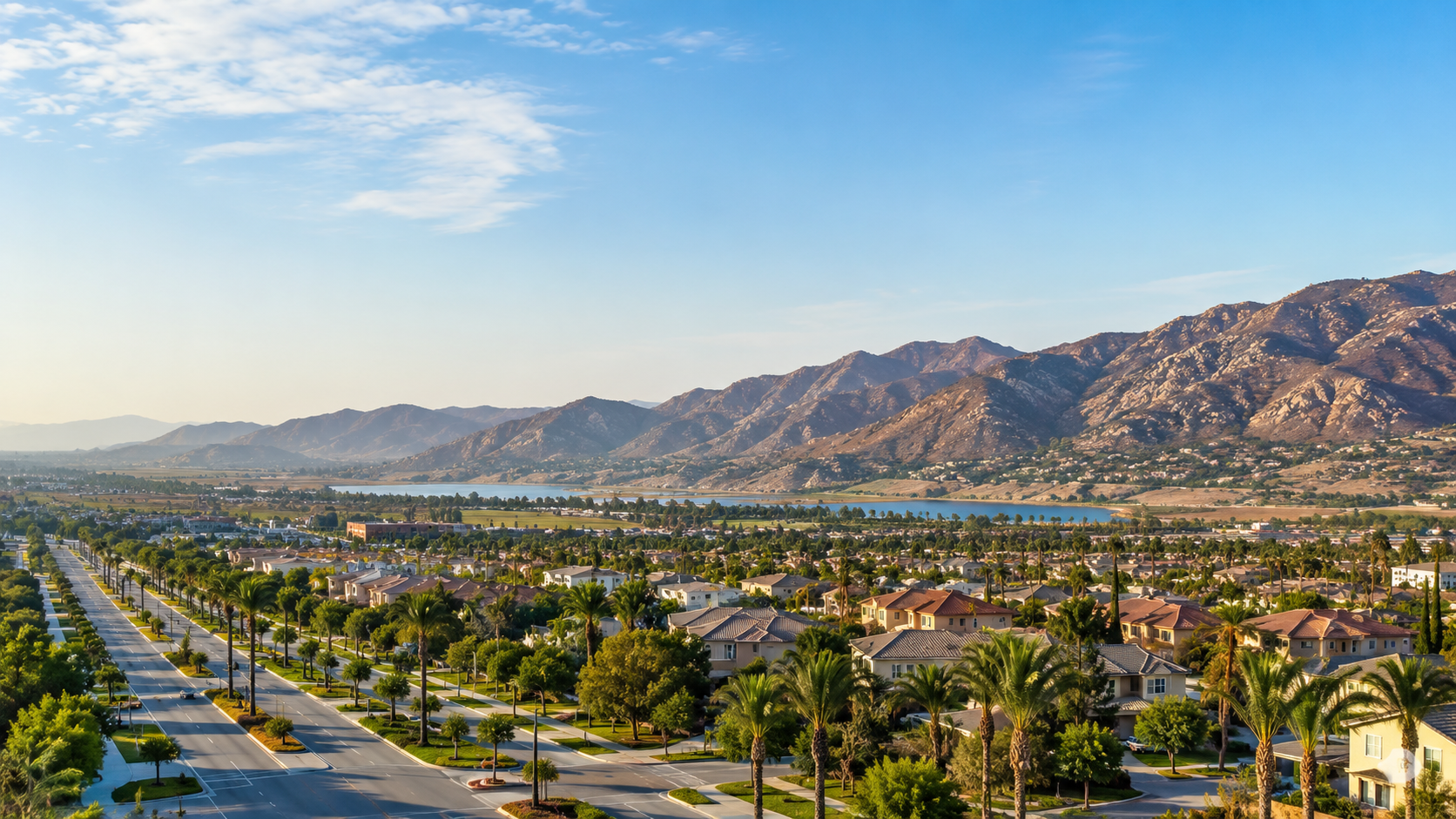
Living and buying in Moreno Valley, CA
Moreno Valley represents a smart choice for buyers seeking affordable California real estate without sacrificing neighborhood quality or school access. Located in Riverside County, approximately 80 miles east of Los Angeles, the city offers a median home price of $421,400 and median household income of $82,637. With 63% owner-occupancy and a median age of 31.9, Moreno Valley attracts first-time buyers, growing families, and investors seeking solid rental yields in a market where inventory remains relatively healthy. The area combines car-dependent convenience with improving local amenities, making it particularly appealing for those priced out of coastal markets.
Who should buy in Moreno Valley
Moreno Valley works best for buyers prioritizing affordability, schools, and space over walkability and public transit.
Entry-level pricing and strong owner-occupancy rates make Moreno Valley accessible for those building equity for the first time.
Good public schools, multiple parks like Sunnymead Park and Manzanita Picnic Area, and family-oriented neighborhoods support growing households.
Rental yield of 5.3% to 6.1%, consistent appreciation, and healthy demand from first-time buyers make this a solid long-term play.
Affordable housing and suburban quiet appeal to remote workers, though limited public transit means car dependence.
Lower cost of living compared to coastal California, diverse amenities, and nearby healthcare facilities support active retirement.
Who should think twice
Transit-dependent households, car-averse buyers, and those seeking urban walkability should consider alternatives.
Best neighborhoods in Moreno Valley
Moreno Valley's neighborhoods reflect its growth trajectory, ranging from established residential communities to newer master-planned developments. Each area offers distinct price points, safety profiles, and lifestyle characteristics.
The diversity of Moreno Valley's neighborhoods means buyers should carefully evaluate specific areas based on school assignment, commute route, and lifestyle priorities. Newer developments in Towngate tend to command premium pricing and offer planned amenities, while established neighborhoods like Sunnymead provide proven walkability and established community services. Price variation across the city is relatively modest, with most homes trading between $385k and $490k; the key differentiator is neighborhood character and long-term growth potential rather than dramatic price swings.
All neighborhoods in Moreno Valley
Browse detailed buyer guides for every Moreno Valley neighborhood we cover, including local market data, walkability, schools, and lifestyle.
Moreno Valley home prices and market data
Moreno Valley's real estate market reflects strong local demand, reasonable inventory levels, and consistent year-over-year appreciation. The market has cooled slightly from pandemic peaks but remains favorable for both buyers and investors.
vs CA Median: 32% below California median | Inventory: 3.2 months
Real estate trends and forecast in Moreno Valley
Moreno Valley continues steady growth driven by demand from first-time buyers and investors seeking affordability. Price appreciation has moderated from pandemic highs but remains positive, reflecting underlying economic fundamentals and inventory balance.
GROWTH DRIVERS
- Significant affordability gap versus coastal California markets
- Growing employer presence in logistics, distribution, and healthcare sectors
- School district expansion and infrastructure investment
RISK FACTORS
- Interest rate sensitivity and broader economic uncertainty
- Competition from alternative Inland Empire markets
Moreno Valley's market fundamentals support cautious optimism for both owner-occupants and investors through 2025 and beyond. The city's 3.2-month inventory suggests balanced conditions where neither buyers nor sellers hold overwhelming leverage. Neighborhoods like Towngate and Sunnymead are seeing renewed interest as remote workers and families seek space without coastal pricing. Long-term appreciation potential remains solid if job growth in the region continues; conversely, economic downturns affecting logistics and distribution employment could pressure prices.
True cost of owning a home in Moreno Valley
Owning a median-priced home in Moreno Valley costs approximately $2,750 to $3,100 monthly when including mortgage, taxes, insurance, and utilities.
Mortgage, taxes, insurance, HOA, utilities, and maintenance add up fast. Use Ficustree’s True Cost of Ownership calculator to model the full monthly carrying cost for your specific price point, county, and loan terms before you commit.
For a quick anchor, a $500K home in Moreno Valley typically runs around $3,210/month all-in. Income to qualify is roughly $128,400 with a 20% down payment of $84,280. Use the calculator above for your exact numbers.
Quality of life in Moreno Valley
Moreno Valley offers moderate quality of life with solid schools, reasonable safety, and good purchasing power, though car dependency and summer heat temper overall satisfaction scores. The lifestyle score of 36/100 reflects suburban tradeoffs between affordability and walkability.
Climate: Hot desert-influenced summers (95-105 degrees June-September), mild winters, minimal rainfall, low humidity.
Schools in Moreno Valley
Moreno Valley Unified School District serves the majority of the city with a mix of high-performing and developing schools. Several campuses earn state recognition for academic improvement, though performance varies.
Top Schools: Cloverdale Elementary, North Ridge Elementary, March Valley High School
Private Options: Shepherd of the Valley School, Country Day School, Cornerstone Fellowship Academy
Is Moreno Valley safe?
Moreno Valley's crime rates are moderate relative to California, with property crime slightly above state average and violent crime near national norms. Safety varies notably by neighborhood, with newer master-planned communities generally reporting lower incident rates.
Safest areas: Towngate, North Moreno Valley residential zones
Trend: stable | Watch: Sunnymead Boulevard corridor and areas near commercial centers experience elevated property crime; exercise standard urban awareness in these zones.
Property taxes in Moreno Valley
Prop 19 (2020) changed reassessment rules; properties changing hands are reassessed at market value, eliminating some long-held tax advantages.
Honest buyer reality check
The honest take: Moreno Valley is a smart financial choice for buyers comfortable with car dependency and inland heat, but not a lifestyle destination for transit enthusiasts or those seeking urban vitality. The market's strength depends heavily on employment in logistics and distribution sectors; economic downturns affecting warehouse jobs could pressure prices more severely here than in diversified coastal markets. Rising interest rates and affordability stress are beginning to slow some buyers, particularly in the first-time segment, which is the market's lifeblood.
Hidden costs buyers miss: Mello-Roos assessments in some newer neighborhoods add $50 to $200 monthly; air conditioning costs during summer months can reach $200 to $300 in older homes; longer commutes to coastal employment mean higher fuel or vehicle costs.
Natural risks: Earthquake risk (modest, similar to Inland Empire baseline), Extreme summer heat and drought conditions
Zoning watch: Industrial and commercial zoning adjacent to residential areas; new distribution centers may increase truck traffic and noise in some neighborhoods.
Unexpected cost factor: 12%
Nature and outdoor life
Moreno Valley provides solid local park access but limited wilderness trails compared to foothill and mountain communities. Regional access to the San Bernardino National Forest and state parks requires short drives.
Seasonal highlights: Spring wildflower bloom in surrounding desert areas; winter mild temperatures ideal for outdoor events.
Daily Life and Amenities in Moreno Valley
Real named places within Moreno Valley from Proximitii’s POI database.
- Taco Bell · 3 min walk
- McDonald's · 4 min walk
- Del Taco · 4 min walk
- Jack in the Box · 5 min walk
- Carl's Jr. · 6 min walk
- Denny's · 6 min walk
- Pam's Donuts · 25 min walk
- Fruitmania · 28 min walk
- Starbucks · 50 min walk
- The Cupcake and espresso Bar · 73 min walk
- Starbucks · 74 min walk
- Nubi Yogurt · 74 min walk
- Sunnymead Park · 12 min walk
- Manzanita Picnic Area · 34 min walk
- Weston Park · 39 min walk
- Sprouts Farmers Market · 21 min walk
- Superior · 29 min walk
- Stater Bros. Markets · 51 min walk
- Walmart Supercenter · 70 min walk
- WinCo Foods · 71 min walk
- ALDI · 72 min walk
- Moreno Valley Senior Center · 15 min walk
- Crunch Fitness · 61 min walk
- City of Moreno Valley Conference & Recreation Center · 69 min walk
- LA Fitness · 70 min walk
- 24 Hour Fitness · 70 min walk
- Towngate Community Center · 71 min walk
- Bowlero Moreno Valley · 7 min walk
- Moreno Valley Towngate 8 · 56 min walk
- Round1 · 64 min walk
- Harkins Moreno Valley 16 · 65 min walk
Frequently asked questions about Moreno Valley real estate
Is Moreno Valley a good place to buy a home?
Yes, for buyers prioritizing affordability, schools, and space over walkability. The city offers median home prices of $421,400 (32% below California median), 63% owner-occupancy, and solid schools. Strong rental yields of 5.3% to 6.1% appeal to investors. However, car dependency and inland heat are real drawbacks; it's best suited for families and remote workers rather than transit-dependent households.
What is the average home price in Moreno Valley?
The median home price is $421,400, with condos averaging around $310,000. Most single-family homes trade between $385,000 and $490,000. Prices vary by neighborhood, with Towngate and newer developments commanding premiums over established areas like Sunnymead and Moreno Beach.
Which neighborhoods in Moreno Valley are best for families?
Towngate offers newer construction, planned amenities, and lower crime; Sunnymead provides established community with shopping and parks nearby; Moreno Beach suits those seeking quieter residential living. All three neighborhoods have good school access and family services within reasonable distance.
How safe is Moreno Valley?
Moreno Valley earns a C safety grade with violent crime rates near national average (index 98) and property crime slightly above state average (index 112). Newer master-planned neighborhoods like Towngate report lower crime; older commercial corridors like Sunnymead Boulevard experience more property incidents. Exercise standard precautions; overall, the city is comparable to many suburban markets.
What is the cost of living in Moreno Valley?
Cost of living is 18% below California average, driven by affordable housing and modest property taxes (0.76%). Median household income is $82,637. However, car dependency increases transportation costs, and summer air conditioning expenses run $200 to $300 monthly. Overall purchasing power ranks strong at 78/100.
Are the schools in Moreno Valley good?
Moreno Valley Unified School District averages 6.5/10 on GreatSchools ratings, with solid options like Cloverdale Elementary and North Ridge Elementary outperforming district average. Performance varies; research specific school assignments. Private options include Shepherd of the Valley School and Country Day School.
How much are property taxes in Moreno Valley?
Property tax rate is 0.76% of assessed value. For a $500,000 home, expect approximately $3,800 annually. Some newer neighborhoods include Mello-Roos assessments adding $50 to $200 monthly. HOA fees average $80 to $150 monthly in master-planned communities; standalone homes may have no HOA.
Is Moreno Valley a good investment market?
Yes. Rental yields of 5.3% to 6.1% are attractive, and 10-year appreciation of 42.3% demonstrates long-term gains. The city benefits from first-time buyer demand and logistics sector employment. Risk factors include interest rate sensitivity and economic downturns affecting distribution jobs. Overall investor signal is BUY for patient capital seeking 5 to 10-year holds.
Where this Moreno Valley data comes from
All numbers come from public, authoritative sources you can verify yourself. We pull median home values and demographic profiles from the U.S. Census Bureau, walk and transit ratings from Walk Score, school information from GreatSchools, and geographic boundaries from OpenStreetMap.
Find Your Moreno Valley Home with AI-Powered Insights
Use Ficustree's data-driven tools to compare neighborhoods, estimate true ownership costs, and identify investment opportunities in Moreno Valley's dynamic market.
Search Moreno Valley Homes →