
If your credit score sits below 620 or you need gift funds and a smaller down payment, FHA usually makes sense. If your credit is strong and you want to avoid paying mortgage insurance forever, conventional usually wins. The core difference comes down to mortgage insurance rules and how long you plan to keep the loan, and many buyers use FHA first, then refinance to conventional once their equity and credit improve. Ficustree can help you model both paths before you make an offer.
TL;DR:
- FHA loans are more suitable for buyers with credit scores below 620 or when using gift funds and a smaller down payment.
- Conventional loans offer better long-term savings through PMI cancellation and better pricing for credit scores above 700.
- FHA’s mortgage insurance lasts for the life of the loan, whereas conventional PMI cancels automatically once 20% equity is reached.
- For loans exceeding conforming limits, conventional options provide higher ceilings and typically stricter credit requirements.
- Running side-by-side affordability comparisons with tools like Ficustree helps buyers understand the long-term costs of each option before making an offer.
Table of Contents
- FHA vs Conventional: The Differences That Matter Most
- What Makes FHA Loans a Practical First-Time Buyer Option?
- When Do Conventional Loans Save You More Money?
- How Much Does FHA vs Conventional Actually Cost Over Time?
- What Should You Ask Lenders Before You Choose?
- Why We Built Ficustree Around This Exact Decision
- Get a Clear Loan Comparison Before You Make an Offer
- Sources
- FAQ
FHA vs Conventional: The Differences That Matter Most
Comparing FHA loans vs conventional loans side by side, the gap shows up in five places: down payment, credit score, mortgage insurance, loan limits, and how sellers respond to your offer. Get these right and the rest of the decision follows.
- Down payment: FHA allows 3.5% down with a 580 credit score, or 10% down with a score as low as 500. Conventional loans typically require 3% to 5% down, but the best pricing kicks in with 20% down or more.
- Credit score expectations: FHA’s published floor is 500. Conventional lenders generally want 620+, and many apply their own stricter overlays regardless of what the program technically allows.
- Mortgage insurance: FHA charges an upfront premium plus annual mortgage insurance premium (MIP) that can last the life of the loan. Conventional loans use private mortgage insurance (PMI), which cancels once you hit 20% equity.
- Eligible properties: FHA covers primary residences only and requires the home to meet HUD’s minimum property standards. Conventional loans work for primary homes, second homes, and investment properties, with more flexible appraisal standards.
Loan limits for 2026: the baseline conforming loan limit is $832,750 for most of the country while FHA’s baseline limit runs lower, around $498,257. High-cost counties push both ceilings higher, with some conventional limits exceeding $1,209,750. If you’re buying above these thresholds, you’re likely looking at a jumbo loan, which carries its own credit and reserve requirements.
What Makes FHA Loans a Practical First-Time Buyer Option?
FHA loans exist to widen the door for buyers who don’t have perfect credit or a large cash cushion. The program’s published minimum is a 500 credit score with 10% down, or 580 with just 3.5% down. In practice, that 500 tier is nearly theoretical. Most lenders overlay their own stricter minimums, and fewer than 5% of FHA loans close with scores below 580 in most markets.
The tradeoff for that flexibility is mortgage insurance you can’t easily shake. FHA requires an upfront mortgage insurance premium (UFMIP) of about 1.75% of the loan amount, financed into your balance, plus an annual MIP that ranges roughly 0.45% to 1.05%.
FHA also enforces HUD property standards during appraisal, checking for safety and habitability issues, and it applies only to homes you’ll occupy as your primary residence.
Where FHA earns its keep for first-time buyers:
- Down payment funds can come entirely from a gifted source, which matters if you don’t have family wealth to draw on.
- Higher debt-to-income ratios are often allowed compared to conventional underwriting.
- Recent credit events (a past late payment, a thin credit file) are more forgivable here than with most conventional lenders.
Pro Tip: Ask your loan officer for the exact MIP percentage and duration tied to your specific down payment before you commit. A one-point difference in down payment can change whether you’re paying MIP for 11 years or for the life of the loan.
When Do Conventional Loans Save You More Money?
Conventional loans reward good credit with better pricing almost immediately. Most lenders want to see a 620+ score, but the real savings show up between 700 and 720, where loan-level price adjustments (LLPAs) start easing off and your interest rate drops. Below that range, LLPAs can add real cost to your rate even if you technically qualify.
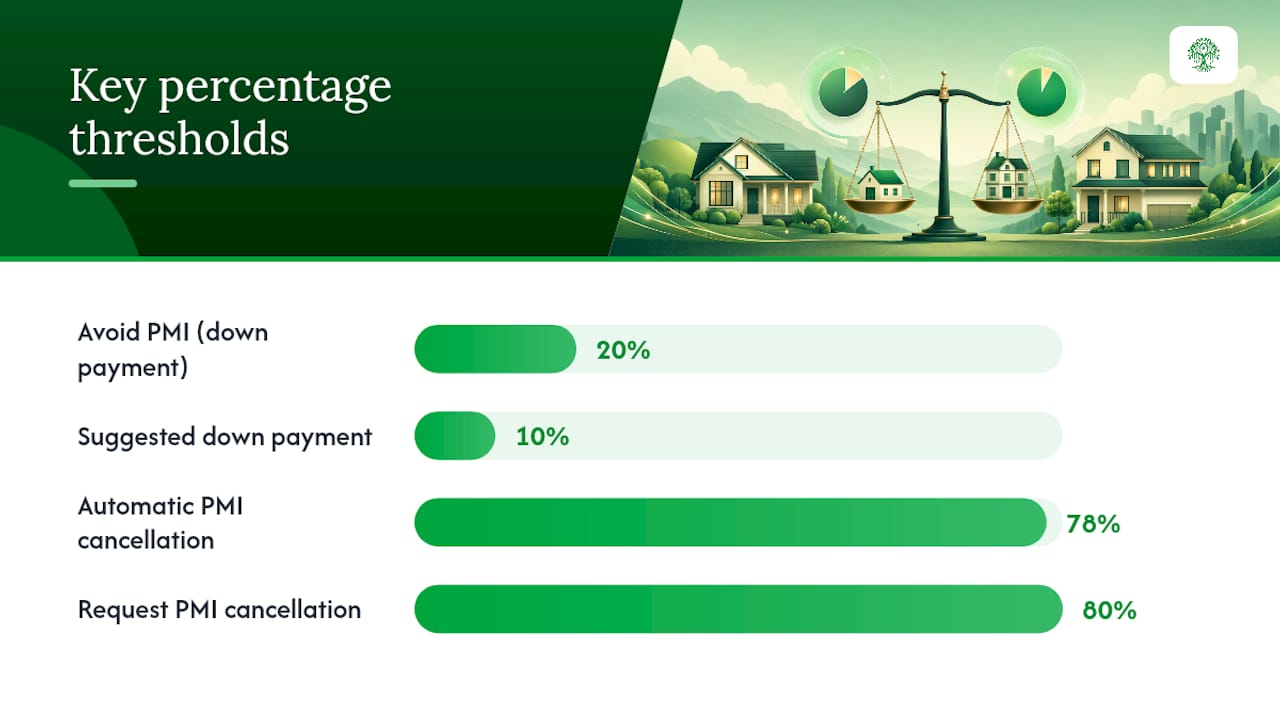
The insurance math is where conventional loans separate themselves from FHA. Put down less than 20%, and you’ll pay PMI, but PMI cancels automatically once you reach 78% loan-to-value, and you can request cancellation earlier at 80% if your payment history is clean. That’s a fundamentally different deal than FHA’s MIP, which often can’t be removed without refinancing entirely.
For 2026, the conforming loan limit for most counties sits at $832,750, with high-cost areas allowing considerably more. Borrow above that ceiling and you’re in jumbo territory, which typically demands a higher credit score and larger reserves.
Conventional loans tend to make the most sense when:
- You can put down 10% or more and your credit score is 680 or higher.
- You plan to stay in the home long enough that PMI’s eventual cancellation actually pays off.
- You want the option to buy a second home or investment property later using the same loan type.
How Much Does FHA vs Conventional Actually Cost Over Time?
Run the numbers past year one, and the FHA vs USDA loan or FHA vs conventional debate stops being about the lower upfront cost and starts being about what you pay for years afterward.
Say you buy a $400,000 home with 3.5% down on FHA. A conventional loan at the same price with 5% down means paying PMI, but that PMI disappears once you cross the 20% equity line, typically within 5 to 10 years depending on your payment schedule and home appreciation.
Over a 10-year horizon, that difference compounds. FHA borrowers often keep paying MIP long after conventional borrowers have shed PMI entirely.
That’s why the refinance-to-conventional strategy is common: buy with FHA now, then refinance into a conventional loan once two things happen:
- Your home equity crosses roughly 20%, either through payments or appreciation.
- Your credit score has climbed enough to qualify for competitive conventional pricing.
At that point, the long-term MIP cost outweighs any short-term convenience.
What Should You Ask Lenders Before You Choose?
Before you lock into either loan, run through this checklist with your lender or buyer’s agent:
- Pull your current credit score and know your debt-to-income ratio before you apply.
- Confirm exactly how much cash you have for a down payment, and whether any of it will come from a gift, including documentation requirements.
- Ask what reserves (extra months of mortgage payments in savings) the lender wants on hand.
- Request the lender’s LLPA table so you can see how your specific credit score affects conventional pricing.
- Ask for a written PMI or MIP estimate, including how long it lasts and what would cancel it.
- Get the UFMIP roll-in cost spelled out, plus a realistic closing timeline for each loan type.
If you’re competing for a home, an FHA offer can look weaker to a seller worried about appraisal repairs. Strengthen it with a larger earnest money deposit, a flexible closing date, or a pre-approval letter that shows your lender has already cleared major hurdles.
Pro Tip: Have your lender run a side-by-side payment comparison, FHA versus conventional, using Ficustree’s mortgage calculator before you write an offer. Seeing the real monthly numbers next to each other makes the decision far less abstract.
Why We Built Ficustree Around This Exact Decision
Most buyers don’t need another article explaining FHA rules. They need someone to run their actual numbers and tell them which door to walk through. That’s the gap Ficustree was built to close.
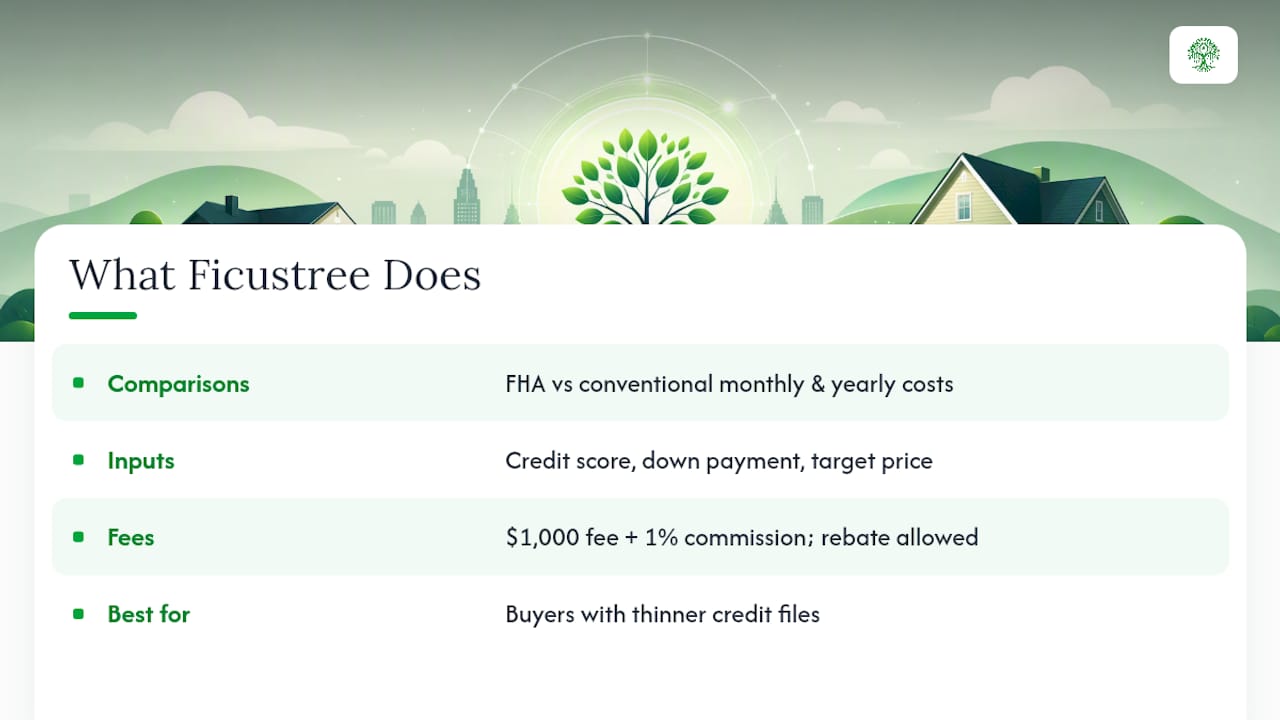
We designed Ficustree’s affordability tools to do what a good loan officer does in a first conversation: take your credit score, your down payment, your target price, and show you what FHA and conventional actually cost you, month by month and year by year. Buyers get direct representation built around a fixed $1,000 fee plus 1% commission, with a rebate where state law permits it, instead of guessing at what a traditional agent’s cut might mean for their offer.
Buyers with thinner credit files, the same profile FHA was designed for, often get the most value from running affordability scenarios early, before overlays and lender quirks turn a simple decision complicated.
— Anand
Get a Clear Loan Comparison Before You Make an Offer
Choosing between FHA and conventional loans gets a lot easier once you can see your actual numbers side by side instead of guessing. Ficustree gives first-time buyers in California and Texas a way to run that comparison and get matched with the right next step.

With Ficustree, you get:
- A fixed $1,000 fee at closing plus 1% commission, with a rebate provided where legally permitted.
- Free access to affordability calculators that model FHA and conventional side by side before you talk to a lender.
- On-demand showing agents so you can tour homes without waiting on a traditional agent’s schedule.
If you’re ready to see which loan type actually fits your numbers, start with Ficustree and get a clear read on your options before you write an offer.
Sources
- FHFA announces conforming loan limit values for 2026
- HUD buying loans (FHA loan basics)
- Consumer Financial Protection Bureau — FHA loans and differences
This article is general information, not a substitute for advice from a qualified financial advisor. Consult a qualified financial professional about your own circumstances before acting on anything here.
FAQ
What’s the Downside of an FHA Loan?
The biggest downside is mortgage insurance that can outlast the loan itself, plus stricter property condition standards during appraisal that can slow down or complicate a purchase.
Why Don’t Sellers Like FHA Offers?
Sellers often favor conventional offers because FHA appraisals enforce HUD minimum property standards that can require repairs before closing, adding time and uncertainty that conventional appraisals typically avoid.
Is FHA Harder to Qualify for Than Conventional?
FHA is generally easier to qualify for on paper, with credit score minimums as low as 500 to 580, but many lenders apply overlays that push their real-world requirements closer to conventional standards.
Should I Choose FHA or Conventional as a First-Time Buyer?
If your credit score is under 620 or you’re using gift funds for a small down payment, FHA usually fits better; if you have strong credit and a larger down payment, conventional loans typically cost less long-term, and Ficustree’s calculators can help you compare both before you decide.